
05-11-2018
06:47
Our team sorts through all blog submissions to place them in the categories they fit the most - meaning it's never been simpler to gain advice and new knowledge for topics most important for you. This is why we have created this straight-forward guide to help you navigate our system.
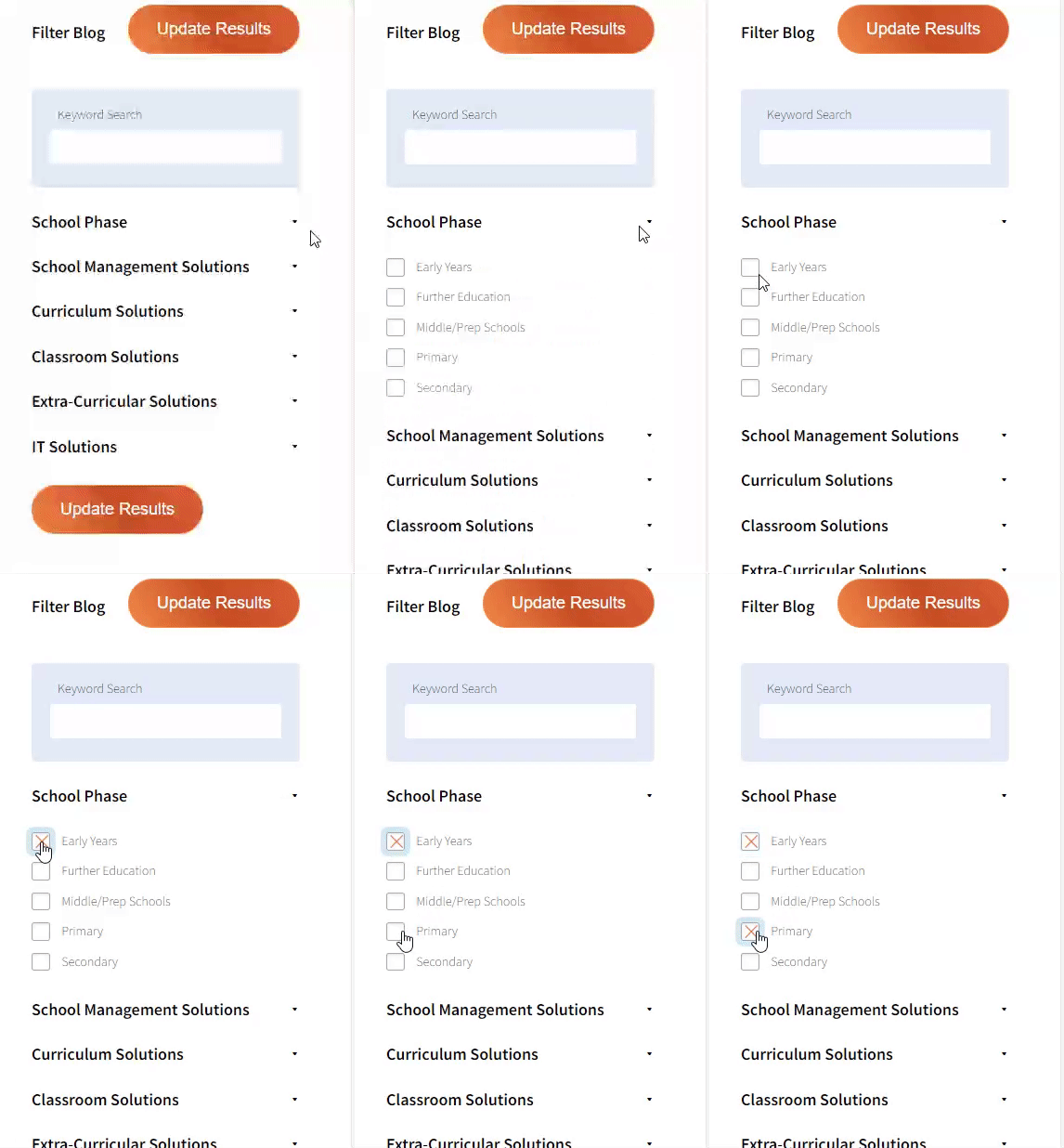
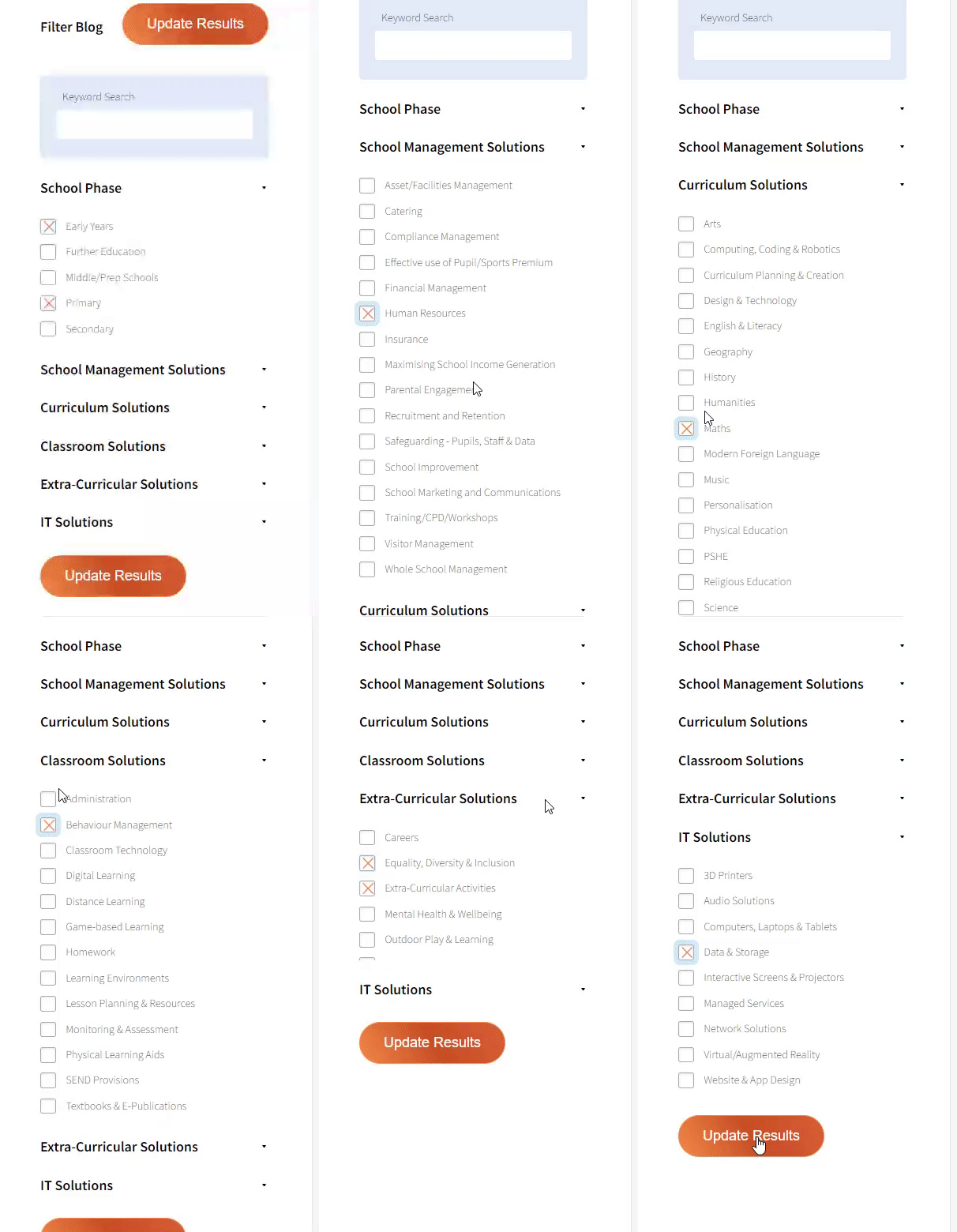
And there you have it! Now your collection of blogs are catered to your chosen topics and are ready for you to explore. Plus, if you frequently return to the same categories you can bookmark your current URL and we will save your choices on return. Happy Reading!
A laptop trolley wheeled into the classroom may appear like a small logical part of a school day. However, the story behind it holds a much bigger challenge most schools face every year. Providing students with reliable access to technology without putting pressure on budgets for teaching and pastoral care is no easy task. The challenges grow as schools need more devices and replace them more often.
The entire scenario has changed today as schools are no longer relying on new devices. Instead, they are turning to refurbished laptops as a cost-effective alternative to meet demand without compromising on quality or responsibility. What follows is why this option works and where it’s worth taking a closer look.

Investing in enough laptops for a school involves various cost factors. Multiple pressures start to build on top of each other every academic year. Combined, these factors explain why a school’s budget struggles to keep pace.
The primary cost pressures schools face include:
Along with these combined factors, most schools have started sourcing devices through the refurbished market instead of purchasing brand new ones. This can help ease most of these cost pressures all at once.
Getting this done relies on a clear insight into how refurbished stock actually is classified. Devices that are sold at the same price are not always sold in the same condition. This emphasises the importance of refurbished grades as they identify a laptop’s cosmetic condition and testing standard. The procurement teams can balance cost and reliability before ordering in bulk with the help of this.
Different factors determine why refurbished laptops are the best choice across educational institutions. Each reason below is worth a closer look on its own terms:
The price of a refurbished laptop is usually lower than that of a new one. It doesn’t mean that refurbished devices won’t cater to everyday needs of classroom applications. They are functional in a way that is similar to a new device. Thus, schools can equip more students and staff with refurbished devices without breaking the bank on what would otherwise be extra funding for other resources.
Where the savings typically show up:
The savings made from investing in refurbished devices can be used by schools on other priority areas. Money saved can be redirected to cover classroom resources, staff employment, or pastoral programmes that would otherwise need budgetary funding.
The manufacturing process of a new laptop involves the consumption of energy and raw materials long before it reaches a classroom. Therefore, extending an existing device’s working life through refurbished devices can reduce the demand for new production. This keeps the hardware functioning for long-term use.
How reuse reduces overall impact:
For schools following environmental goals or long-term initiatives, refurbished technology represents a logical instance of responsible procurement. Furthermore, it offers a natural everyday starting point for teaching children about carbon footprints. A laptop that has been repaired and reused instead of being replaced makes e-waste clear and practical.
Most classroom activities, including browser-based research, word processing, and cloud-based learning platforms, will not require the latest hardware. So, a well-maintained refurbished laptop can support the tasks students and teachers rely on daily.
What can pupils still do reliably:
This amount of reliability is important across shared or high-use classroom settings. This is because daily performance matters more than the specifications a few classroom tasks will call on.
New devices involve extended procurement processes and delivery timelines. Refurbished stock is available in higher volume and with shorter lead times. This helps schools respond promptly whenever devices need a replacement mid-term.
Why faster availability matters:
Shorter lead times in refurbished laptops matter the most when a device fails mid-term. It allows schools to replace it immediately without compromising on lessons or coursework.
When you get a refurbished device from a trusted supplier, the hardware has been thoroughly functionally tested and the data certified wiped by qualified technicians. That gives schools confidence that the data has been deleted. Before a refurbished device is shipped to a classroom, it meets certain, documented standards of performance.
What proper refurbishment should include:
The technical inspection allows IT staff and parents to form a similar documented basis of trust, rather than guesswork that a refurbished device is just safe to use.
Access to devices isn’t the only problem in the classroom. It bleeds over into children’s homes, and the consequences of not doing things right extend beyond the school gates. New research by the Digital Poverty Alliance in the UK has found that 98% of families and pupils think it is vital that every pupil and family own a laptop for university applications and to attend.
Although laptops are in common use, most underprivileged pupils still do not have access to a laptop. This shows how device access is already affecting achievement before the further education stage is reached, and that schools planning to develop refurbished laptop schemes are dealing with an issue that begins before further education is likely to be considered by many.
It can help schools to:
Regular access fills this need, making access go from a once-off opportunity to an ongoing opportunity.
Purchasing technology solutions today will determine what the school can offer in the future long after the purchase is forgotten. Placing equipment purchase within a wider framework, rather than being a frantic pack-up each year to fill holes, tends to serve pupils and budgets far better over time.
Schools that make their use of technology flexible and encourage responsibility over use are likely to be able to adapt more intelligently whatever the next classroom needs end up being.
For professionally refurbished laptops for schools, businesses, charities and home users, contact pure IT.








Are you looking for solutions? Let us help fund them! Nexus Education is a community of over 11,000 schools that come together to share best pract... View More
Established in 2011, One Education is a company at the heart of the education world, supporting over 600 schools and academies. Our unique appeal a... View More
School Space is a social enterprise that has empowered schools for over 14 years through their profitable and hassle-free lettings services. So far... View More
Unify is an online sales and marketing tool that allows users to create tailored personalised documents in moments. View More
There’s nothing special about the energy we sell. In fact, it’s exactly the same energy as all our competitors provide. But there is something spec... View More
Securus provide market-leading monitoring solutions to safeguard students on ALL devices both online and offline. We also offer a full monitoring s... View More
Robotical makes Marty the Robot - a walking, dancing coding robot that makes programming fun and engaging for learners as young as 5. Our robots co... View More