
08-01-2026
10:16
Our team sorts through all blog submissions to place them in the categories they fit the most - meaning it's never been simpler to gain advice and new knowledge for topics most important for you. This is why we have created this straight-forward guide to help you navigate our system.
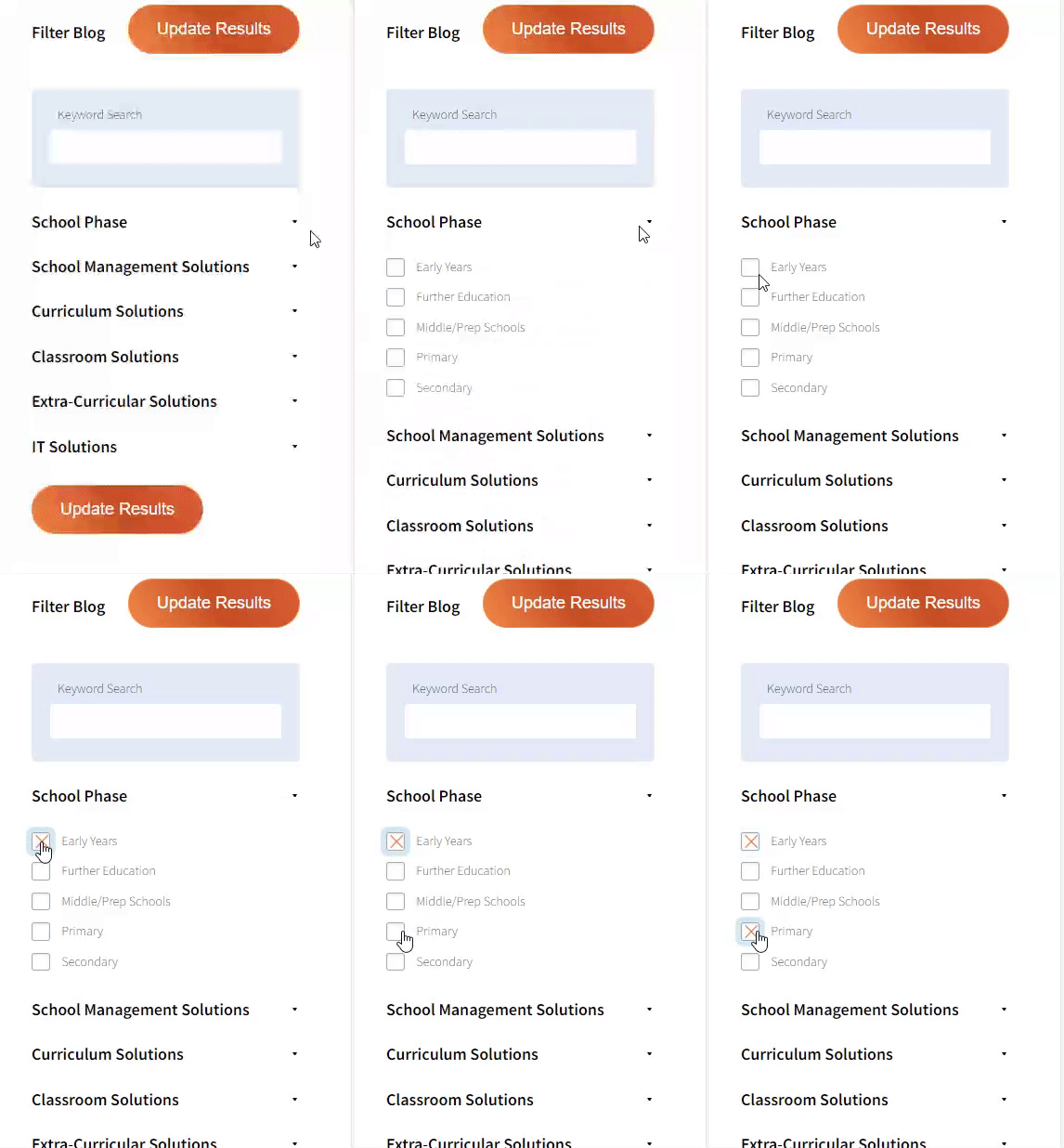
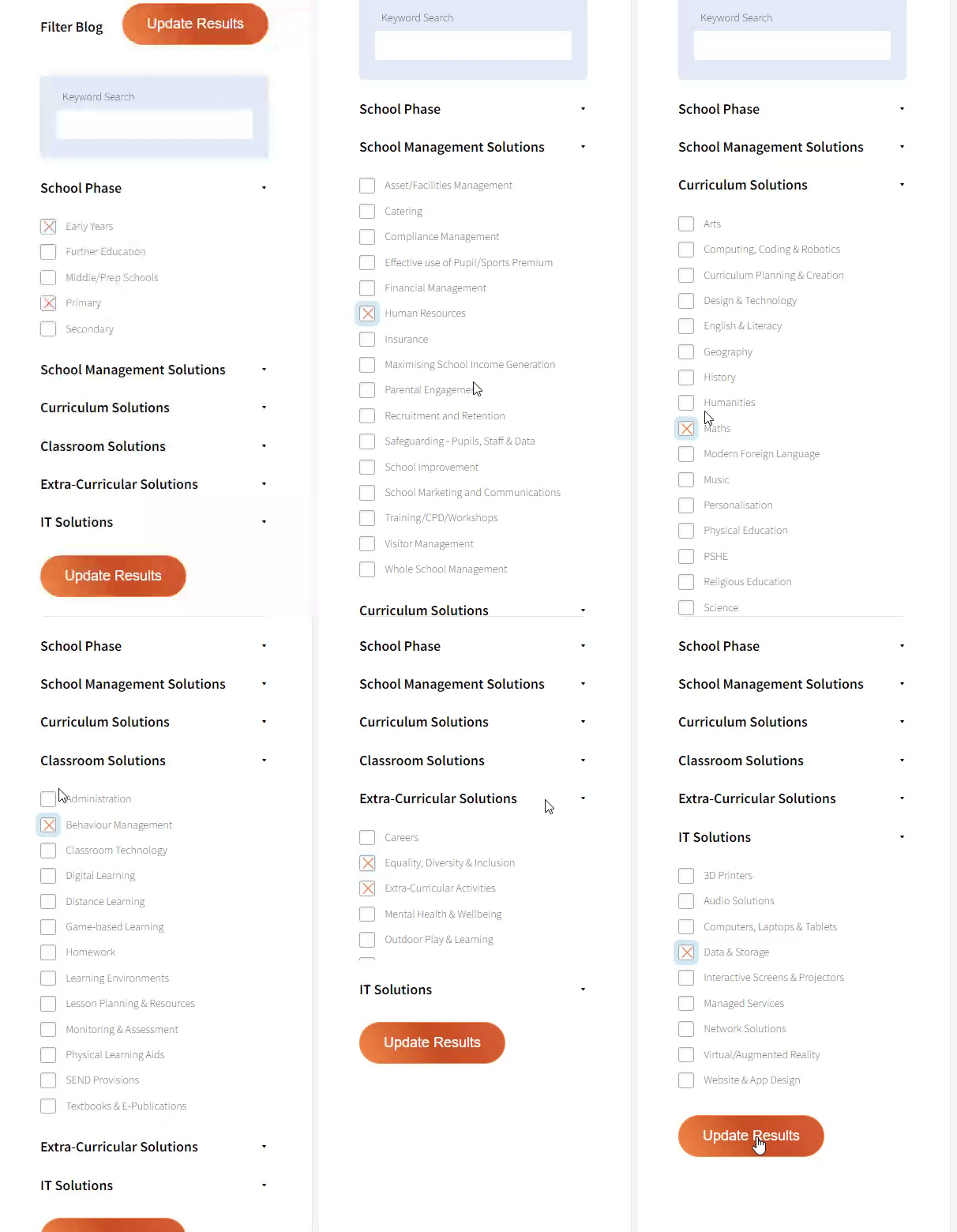
And there you have it! Now your collection of blogs are catered to your chosen topics and are ready for you to explore. Plus, if you frequently return to the same categories you can bookmark your current URL and we will save your choices on return. Happy Reading!
Introduction
Back to school for children and young people can be a time of anxiety and also great excitement and happiness. For some, it is a chance to reconnect with friends that they haven’t seen over the summer holidays; for others, it is a chance to engage with learning and teachers with new challenges and joy. The start of a new academic year is about focusing on creating smooth transitions for our learners, and helping them manage new situations, busy timetables, and negotiate big feelings at times of change. But for parents and practitioners, adult needs are sometimes on the back bench. In this short article, we consider ways that parents and practitioners can nurture their own wellbeing through the start of the autumn term.

Parents and carers
For parents and carers, the return to school can be a time for mixed feelings; loss of the noise and busy days that the summer holidays brought with them, and missing spending time with their child or children, however also relief at the chance to resume normal routines and regain some personal time and space. Some suggestions to help manage those early days when school resumes are:
Maximise the weekends
Make some weekend plans on the calendar or in the diary to have meaningful quality time together between school days; this can be as simple as trips to the park, or maybe embarking on a new challenge together such as ‘Geocaching’- finding tiny hidden containers around your local area together using the free Geocaching app.
Meet your own needs
Sometimes without the children’s meals to make and snacks to provide, it can be easy to forget our own dietary needs. Make sure you have your own snacks and healthy lunches to enjoy even now you may only be making food for yourself during the day.
Make time for yourself
The resume of the academic term can feel like being back on a conveyor belt at times, juggling school runs, clubs and activities; make sure that you make a little ringfenced time for yourself during each week to pause and take a breath, even if it is just a short walk on your own, or eating lunch outside away from your laptop, or a visit to a shop that isn’t for the family food shop or new school uniform.
Practitioners and educators
For teachers and early years practitioners, stepping back into the classroom after weeks away may feel overwhelming. Here are some ways to protect your energy and maintain peace as term begins:
Plan for pauses
Build small moments of rest into the working day where possible. Even a few minutes away from your desk or classroom can provide an opportunity to reset and recharge.
Connect with colleagues
Make time to check in with colleagues and share experiences. A quick conversation, coffee or walk together can help reduce feelings of isolation and build a sense of connection.
Set boundaries
Try to establish realistic boundaries around emails, planning and work outside your contracted hours. Not everything needs to be completed immediately.
Notice the positives
Take time to recognise small successes, moments of connection and progress. These can provide encouragement during the busy first weeks of term.
Further reading and resources
Partnership for Children have created some free printable wellbeing activities, designed to support mental health and emotional wellbeing and help children understand and express feelings, manage anxiety, and cope with change, loss, and life’s challenges. The activities are suitable for a range of ages from 3 to 12 years and can be used at home or in school with small groups or the whole class. Free wellbeing activities for children, schools and families.
Conclusion
As the rhythm of school life begins again, it can be helpful to remember that transitions affect adults as much as children. The return to routines, responsibilities and expectations can bring a range of emotions, from relief and excitement to uncertainty and fatigue. Taking time to acknowledge these feelings, rather than rushing past them, allows us to respond to ourselves with kindness. By attending to our own wellbeing, we create the capacity to be present, patient and supportive for the children and young people who look to us for guidance.








Are you looking for solutions? Let us help fund them! Nexus Education is a community of over 11,000 schools that come together to share best pract... View More
Established in 2011, One Education is a company at the heart of the education world, supporting over 600 schools and academies. Our unique appeal a... View More
School Space is a social enterprise that has empowered schools for over 14 years through their profitable and hassle-free lettings services. So far... View More
Unify is an online sales and marketing tool that allows users to create tailored personalised documents in moments. View More
There’s nothing special about the energy we sell. In fact, it’s exactly the same energy as all our competitors provide. But there is something spec... View More
Securus provide market-leading monitoring solutions to safeguard students on ALL devices both online and offline. We also offer a full monitoring s... View More
Robotical makes Marty the Robot - a walking, dancing coding robot that makes programming fun and engaging for learners as young as 5. Our robots co... View More