18-09-2024
04:28
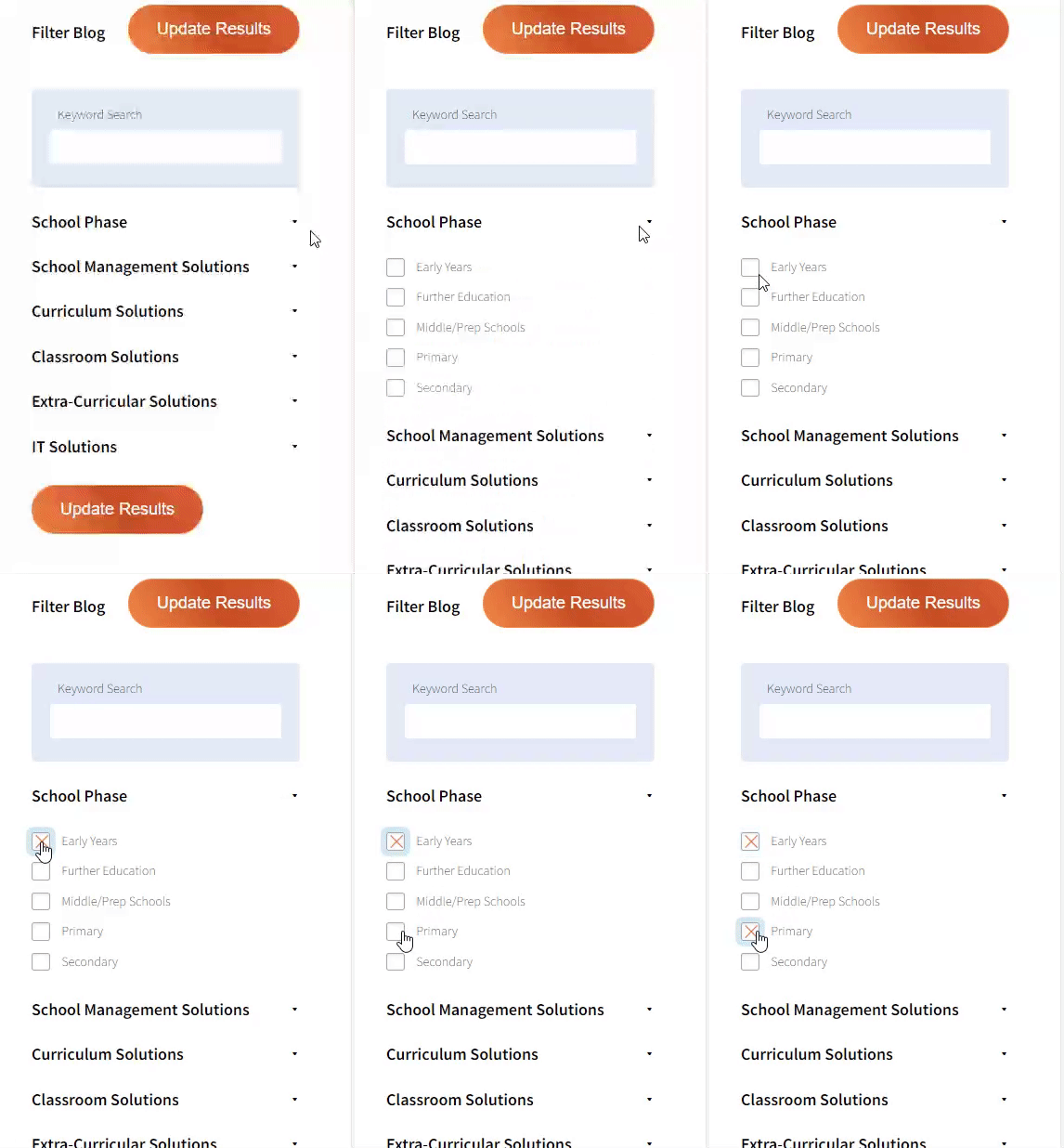
Our team sorts through all blog submissions to place them in the categories they fit the most - meaning it's never been simpler to gain advice and new knowledge for topics most important for you. This is why we have created this straight-forward guide to help you navigate our system.
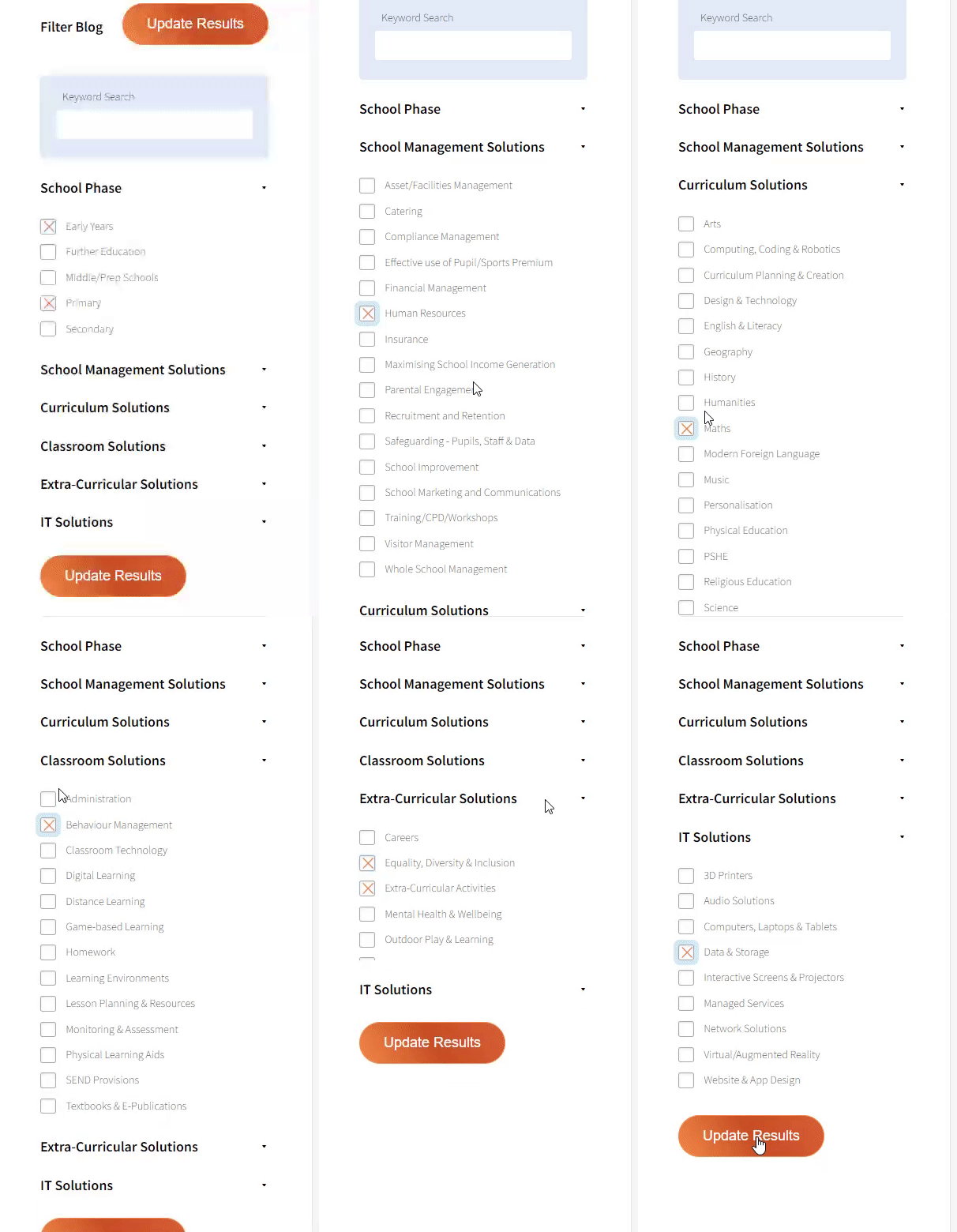
And there you have it! Now your collection of blogs are catered to your chosen topics and are ready for you to explore. Plus, if you frequently return to the same categories you can bookmark your current URL and we will save your choices on return. Happy Reading!
Retirement is a phase of life that gradually approaches. For teachers, it often comes with an unusual blend of uncertainty and anticipation. This phase involves different processes that rely on pension rules that often remain unclear for teachers during their busy classroom careers.
Such uncertainty often starts to fade once the numbers and options are clear. That’s where careful, strategic retirement planning for teachers starts, well before the final year of their work. This gives teachers time to review their pension entitlements, explore savings options, and prepare for retirement that involves more than finances.

Retirement for teachers has become a highly complicated topic in recent times. Pension reforms, increasing life expectancy, and growing uncertainties around long-term financial security have shaped it. Understanding this broader context helps explain why proactive planning matters more than it did for earlier generations.
A couple of new changes describe why this entire dynamic has shifted so significantly:
Specifically, longer lifespans have transformed how long retirement income will last. Based on recent Office for National Statistics (ONS) data, life expectancy at age 65 has increased to 21.2 years for women and 18.7 years for men. This implies that most teachers can now expect a retirement lasting over two decades.
Here are a couple of retirement planning tips that form a strong foundation for those who’re approaching this phase of life from their teaching career.
A better understanding of your pension can turn guesswork into clear numbers you can plan around. Requesting one sooner, with the help of a financial adviser, can help. This gives you sufficient time to address contribution gaps before they become too complex to manage on your own.
A clear idea of these numbers can turn your retirement from any assumed date into a solid plan that’s worth strategising around. Preventing such financial uncertainties plays a huge role in encouraging teacher wellbeing. This is because financial worries turn into one of the main sources of stress when heading into retirement.
There are two well-worth ways to start generating income besides a standard pension. These include personal savings accounts and Additional Voluntary Contributions. Including a couple of options often provides more flexibility than relying on a single source.
Spreading out your savings across a few areas can give you better control over how and when the funds become accessible later.
Shifts during retirement affect more than income. Consider the shift away from a structured school routine. Creating a rough plan for how you can spend that time can make adjustments seamless.
Even creating a rough plan for this change can prevent the sense of drift that a few retirees explain during the initial year.
Retirement affects more than pension income, since healthcare coverage and other workplace benefits often follow their own separate rules. Reviewing each one individually avoids unwelcome surprises once employment officially ends.
A short conversation with HR well before the final day usually clears up most of these details in one sitting.
Pension rules and tax implications can be genuinely complex, and waiting until the final months limits what can realistically be adjusted. Starting these conversations several years out gives far more room to plan effectively.
Arriving prepared for that first conversation tends to make it considerably more productive than piecing details together later.
Pension rules, tax implications, and the range of savings options available can be genuinely difficult to navigate alone, particularly for anyone unfamiliar with how these systems interact. Because teacher pensions often work differently from standard workplace pensions, general financial advice does not always translate cleanly to an educator’s specific situation.
Some financial advisory services, such as Retiring Edu, focus specifically on retirement planning for teachers and school employees, offering pension analysis and guidance tailored to the structure of education-sector benefits. Seeking out this kind of specialised support, rather than general financial advice, often surfaces options and considerations that might otherwise be missed.
Every teacher’s path toward retirement looks a little different, shaped by years of service, personal circumstances, and how early the planning process actually begins. Treating retirement as a gradual transition rather than a single cut-off date tends to produce the smoothest outcome, both financially and personally.
Retiring Edu DBA offers personalized retirement planning for teachers and educators. Plan a financially strong and secure future today!







Are you looking for solutions? Let us help fund them! Nexus Education is a community of over 11,000 schools that come together to share best pract... View More
Established in 2011, One Education is a company at the heart of the education world, supporting over 600 schools and academies. Our unique appeal a... View More
School Space is a social enterprise that has empowered schools for over 14 years through their profitable and hassle-free lettings services. So far... View More
Unify is an online sales and marketing tool that allows users to create tailored personalised documents in moments. View More
There’s nothing special about the energy we sell. In fact, it’s exactly the same energy as all our competitors provide. But there is something spec... View More
Securus provide market-leading monitoring solutions to safeguard students on ALL devices both online and offline. We also offer a full monitoring s... View More
Robotical makes Marty the Robot - a walking, dancing coding robot that makes programming fun and engaging for learners as young as 5. Our robots co... View More