26-03-2021
11:15
Our team sorts through all blog submissions to place them in the categories they fit the most - meaning it's never been simpler to gain advice and new knowledge for topics most important for you. This is why we have created this straight-forward guide to help you navigate our system.
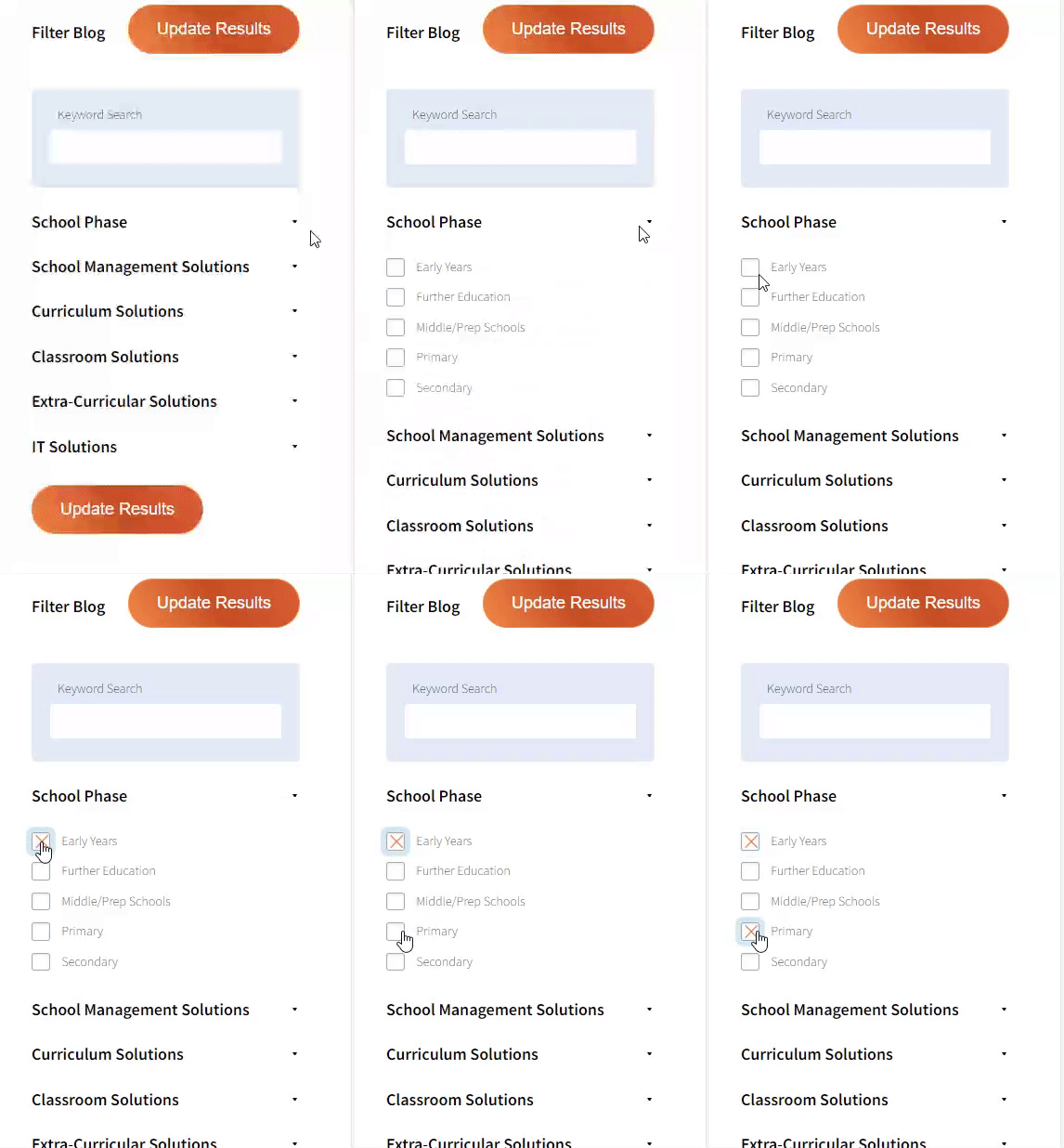
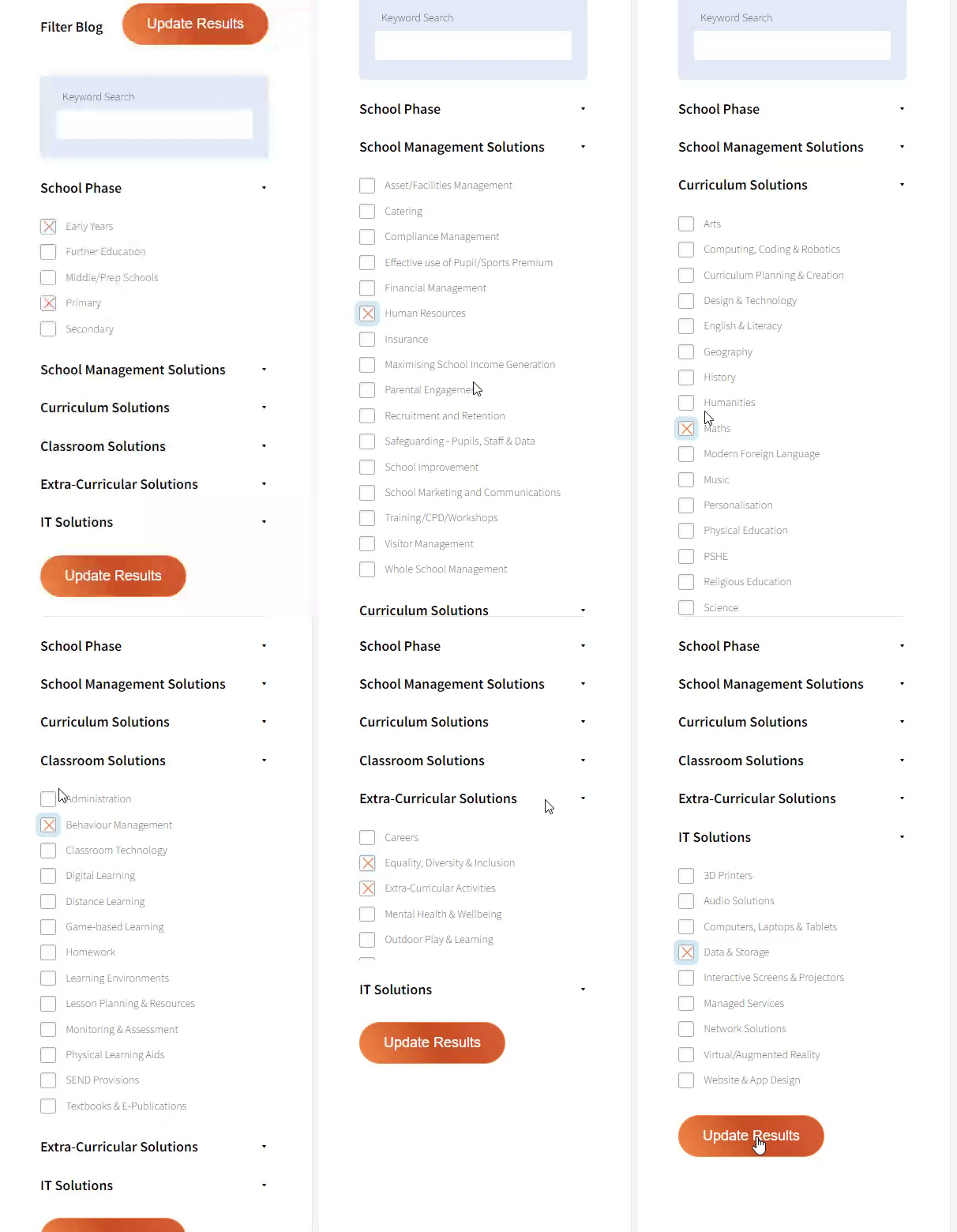
And there you have it! Now your collection of blogs are catered to your chosen topics and are ready for you to explore. Plus, if you frequently return to the same categories you can bookmark your current URL and we will save your choices on return. Happy Reading!

This time of year can see many young people embarking on weeks of examinations, such as mock GCSEs (General Certificate of Secondary Education) in England. Whilst for those in formal education, they may have encountered many standardised assessments and tests before, being faced with several sessions of exam conditions for tests that give benchmarks and potential could affect their future pathways may seem incredibly daunting. This article explores how through preparation, perspective, and offering space for breaks and resets can be valuable in supporting young people as they go through examination periods, and possibly reduce exam anxiety.
Teachers and schools are best placed to offer support to learners, including through recommendations of reading, and providing revision resources. As parents and carers, taking time to find out what is to be covered in the exams can be helpful; asking to see the online platform where the school sets work, or the student’s books, can help us to understand the diversity and scale or topics needed to be covered.
Sit and write out a timetable to keep on the fridge with days and times of the examinations which can be looked at when walking past, and ticked off when complete.
Ask the learner what works best for them; would they like flashcards to write out questions and answers, or post it notes to stick in books with annotations? Sites such as BBC Bitesize offer several free quizzes across topics that learners can try for free on their device, some with multiple choice options that can be a useful starting point with exam prep.
Preparing physically for study can be valuable too; offer their favourite snack or drink before they sit down to a study session; make sure they are hydrated with a water bottle by their side. Also encourage the learner to set a study goal for their session; how long do they want to focus for and what do they plan to do in that time slot? Having a study goal can help each session feel meaningful.
When faced with exams such as GCSEs that hold value in possible entry to next steps such as college or sixth form, or even future careers such as teaching, some learners may become anxious and worried about outcomes.
To help gain perspective, speak to them about your own learning journey; what did you study at school and how did it shape your career path? Remind them that exams can always be retaken, and often they are a stepping stone to the next step rather than the final goal post or finish line.
Remember that sitting exams can help young people develop a range of skills that go beyond the subject being tested. Some of these skills include academic skills (knowledge retention, critical thinking, problem-solving and written communication), personal skills (self discipline, time management, and organisation), emotional skills (resilience and stress management) and practical life skills (preparation and planning, decision making, and accountability). Many employers also value qualities that exams can help develop, such as reliability, commitment, working under pressure, independent learning and adaptability. Reminding young people of these skills that can be developed through exams may help offer wider perspective and value in the process.
Often education now involves logging into websites, apps and submitting work digitally. This can lead to a lot of screen time when placed on top of the online habits that many young people may already have through enjoying social media and gaming. Reminding young people of the value in taking breaks away from screens is always valuable, but especially during examination periods where they may be suffering from over-scrolling and screen fatigue.
Plan a social reset activity in each evening; even if it is only a 10 minute walk together to the corner-shop for a sweet treat, a chat outside, or a card game at the kitchen table, these resets offer a chance for connection, communication, and change of focus to calm the nervous system and regulate any anxiety or tension.
Although examinations can cause anxiety for many learners, it can be helpful to remember that exams are a way to develop other skills rather than just gaining a grade at the end. Helping learners to see the examination period as a time for challenge but also growth, and just another step along their life journey, can offer perspective as they move through this busy time.






Are you looking for solutions? Let us help fund them! Nexus Education is a community of over 11,000 schools that come together to share best pract... View More
Established in 2011, One Education is a company at the heart of the education world, supporting over 600 schools and academies. Our unique appeal a... View More
School Space is a social enterprise that has empowered schools for over 14 years through their profitable and hassle-free lettings services. So far... View More
Unify is an online sales and marketing tool that allows users to create tailored personalised documents in moments. View More
There’s nothing special about the energy we sell. In fact, it’s exactly the same energy as all our competitors provide. But there is something spec... View More
Securus provide market-leading monitoring solutions to safeguard students on ALL devices both online and offline. We also offer a full monitoring s... View More
Robotical makes Marty the Robot - a walking, dancing coding robot that makes programming fun and engaging for learners as young as 5. Our robots co... View More