
25-04-2022
04:16
Our team sorts through all blog submissions to place them in the categories they fit the most - meaning it's never been simpler to gain advice and new knowledge for topics most important for you. This is why we have created this straight-forward guide to help you navigate our system.
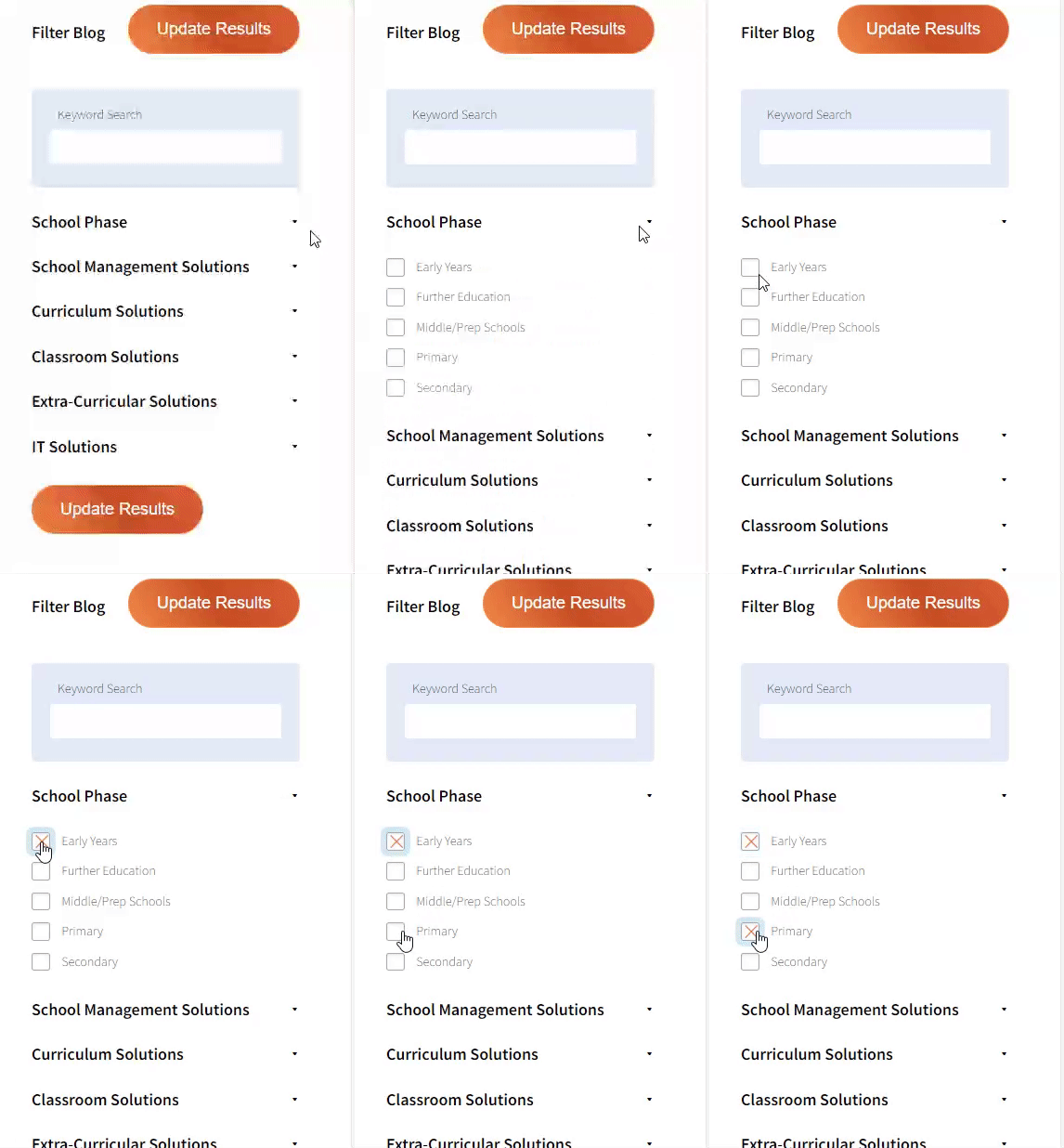
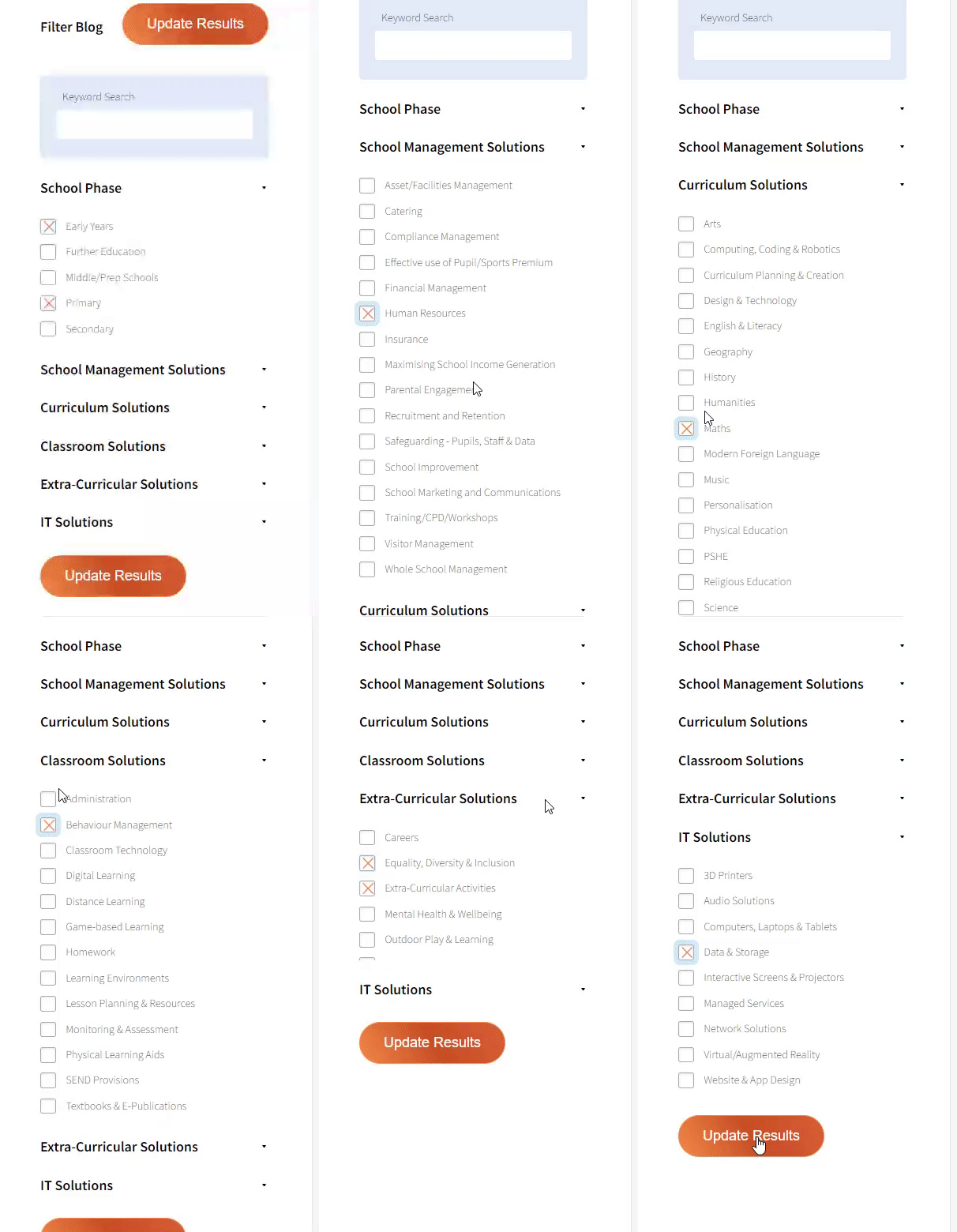
And there you have it! Now your collection of blogs are catered to your chosen topics and are ready for you to explore. Plus, if you frequently return to the same categories you can bookmark your current URL and we will save your choices on return. Happy Reading!

For many schools and Multi-Academy Trusts, opening facilities to the community genuinely can be a “win-win”, strengthening community relationships while generating additional income. However, without a clear understanding of the true operational overheads, what looks like surplus revenue on a spreadsheet can quickly become a hidden financial drain. As school budgets tighten and operational pressures increase, the Department for Education (DfE) encourages schools to maximise the use of their assets. But doing this sustainably requires moving beyond top-line income and focusing on true Return on Investment (ROI). You need to account for the full operational cost of running lettings, not just the hire fees, when deciding whether to manage everything in-house or via a professional school lettings company.
Hidden costs are the unseen expenses that eat into a school’s rental income, such as the time staff spend managing bookings, additional cleaning, extra utility bills, booking system fees and maintenance for wear-and-tear. For many schools, these overheads mean that what looks like profit is actually a loss. Identifying these costs helps schools determine whether outsourced school lettings are a more cost-effective way to secure a reliable share of monthly income, without the burden of staffing expenses, compliance management, and operational risk.
In our experience working with hundreds of UK schools since 2011, we’ve found that almost 80% of the schools we speak to managing lettings in-house are either making a loss or generating less than 10% profit.
The DfE’s ‘Advice on Charging for School Facilities’ makes it clear: schools should not subsidise community use from their core educational budget. In our conversations with School Finance Managers, we often discover that sports facilities are inadvertently being subsidised by other funds due to site assistant overtime and the costs of replacing equipment quietly outpacing hire income.
When calculating your ROI, you must account for the following four pillars:
Managing enquiries, vetting hirers, and chasing late payments isn’t free time. If your School Business Manager earning £40,000/year spends just 5 hours a week on lettings, that represents an annual cost of roughly £5,300- and that doesn’t account for the expensive overtime costs many schools face for site teams, which we have seen reach over £40 per hour in some regions.
High-traffic community use is a sign of a successful school hub, but it does require a proactive approach to maintenance. Rather than letting wear-and-tear become a burden, a managed service ensures your hire rates and utilisation are high enough to build a surplus in income. This means the community is essentially ‘paying forward’ for the facilities they love, allowing you to keep your halls and pitches in top-tier condition for your students during the school day.
It is a common misconception that hiring out a hall for £30 per hour is pure profit. In reality, heating a large Victorian hall or powering 3G floodlights can cost significantly more than the booking fee if rates don’t take into account the latest energy tariffs. Without a data-driven pricing strategy, schools often find they are effectively subsidising external groups. A well managed service eliminates this energy gap by ensuring hire rates are mutually beneficial; affordable for the community but enough to cover utility costs.
To scale a lettings programme, schools often face the cost of specialised booking software, which can carry hefty annual fees, and the digital marketing spend required to actually find new hirers. Without a professional marketing strategy, facilities often sit empty and there becomes a heavy reliance on one hirer, which is the highest hidden cost of all, especially if they cancel future bookings. Partnering with a fully managed lettings provider removes the overheads as they provide the high-end booking technology and handle the localised marketing campaigns (SEO, social media, and community outreach) at their own expense, ensuring your facilities stay busy and your revenue remains consistent.
If your current lettings programme isn’t delivering a true profit, consider these three steps:
In-house lettings can be an effective model in certain contexts, particularly where facilities are limited in scope or community usage is stable and long-term. However, the operational efficiency, marketing expertise, and scale of a specialist school lettings company often delivers higher net income than in-house management due to having greater long-term sustainability and growth.
The most sustainable model ultimately depends on your own context, capacity, and objectives as a school.
A: Schools can generate a surplus from in-house lettings to be reinvested into school resources and facility maintenance if hire charges at least cover staffing and energy costs during letting hours. Effective management may require actively marketing the facilities to local groups to maximise utilisation of your facilities rather than relying solely on incoming enquiries.
A: Most school lettings companies operate on a zero-upfront-cost basis. Instead of charging fixed fees, a school lettings provider typically uses a revenue-share or profit-share model, where they retain a percentage of the income generated. This covers all marketing, technology, safeguarding compliance, and on-site staffing costs, allowing schools to benefit from outsourced school lettings without financial risk to their core education budget.
A: To choose the right school lettings provider, schools should assess three core areas: safeguarding and compliance systems, local community marketing performance, and financial transparency. A high-quality school lettings company will be able to clearly demonstrate ROI, reporting structures, and long-term sustainability models.








Are you looking for solutions? Let us help fund them! Nexus Education is a community of over 11,000 schools that come together to share best pract... View More
Established in 2011, One Education is a company at the heart of the education world, supporting over 600 schools and academies. Our unique appeal a... View More
School Space is a social enterprise that has empowered schools for over 14 years through their profitable and hassle-free lettings services. So far... View More
Unify is an online sales and marketing tool that allows users to create tailored personalised documents in moments. View More
There’s nothing special about the energy we sell. In fact, it’s exactly the same energy as all our competitors provide. But there is something spec... View More
Securus provide market-leading monitoring solutions to safeguard students on ALL devices both online and offline. We also offer a full monitoring s... View More
Robotical makes Marty the Robot - a walking, dancing coding robot that makes programming fun and engaging for learners as young as 5. Our robots co... View More