
11-11-2020
02:26
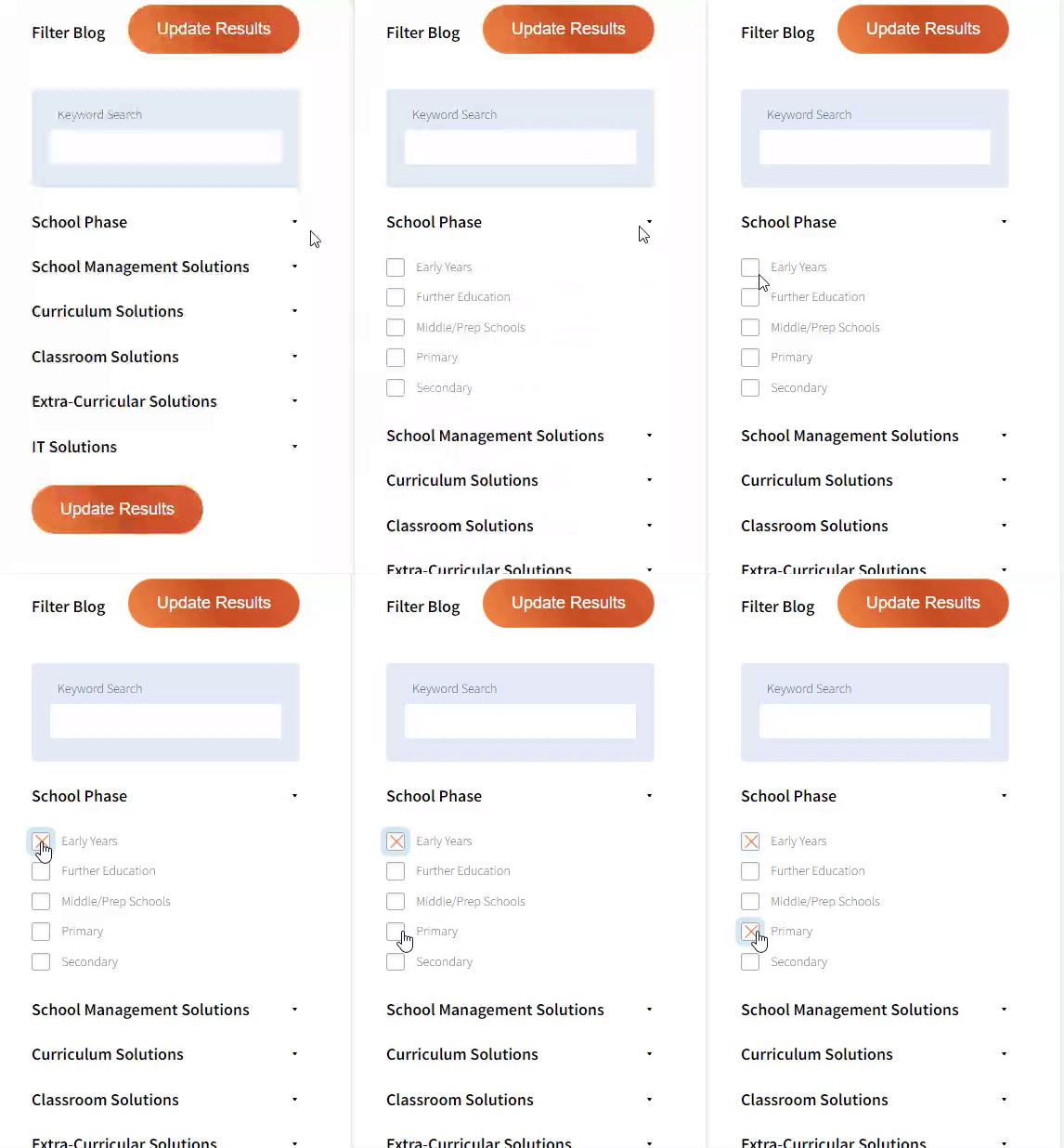
Our team sorts through all blog submissions to place them in the categories they fit the most - meaning it's never been simpler to gain advice and new knowledge for topics most important for you. This is why we have created this straight-forward guide to help you navigate our system.
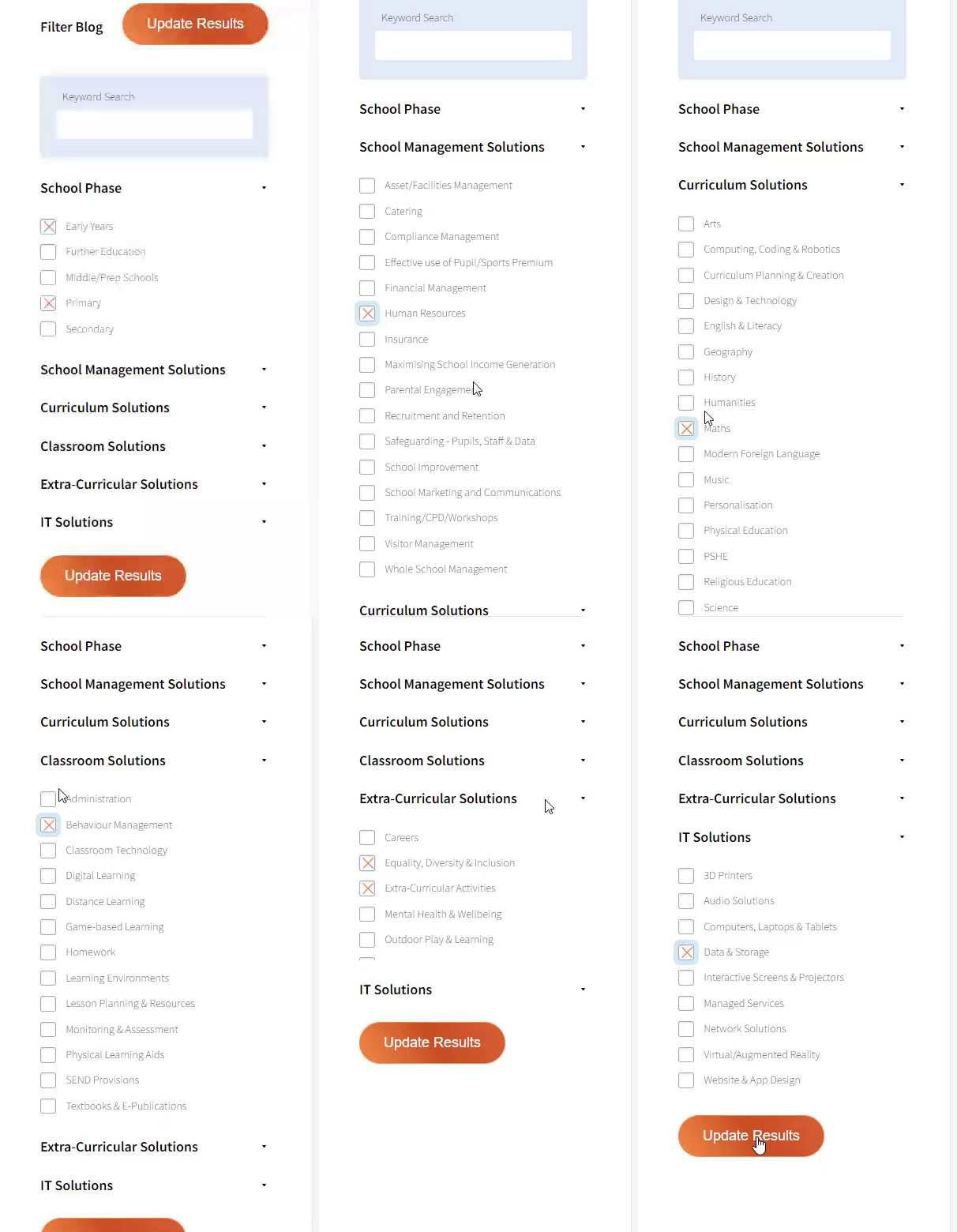
And there you have it! Now your collection of blogs are catered to your chosen topics and are ready for you to explore. Plus, if you frequently return to the same categories you can bookmark your current URL and we will save your choices on return. Happy Reading!
A Menopause Action Plan is pretty much what it sounds like – it’s a full plan for how you’re going to support employees in perimenopause or menopause. It includes training, occupational health, peer support, workplace adjustments, risk assessments and policies and procedures.
The government says that if your school, academy or academy chain has more than 250 employees you will need a Menopause Action Plan from next spring (2027) but the law hasn’t been written yet. From April 2026 you can have one if you like!
To be honest, they’re a really good thing to have to help with retention, to comply with existing equality and disability laws – and to create a happy working environment for everyone. Many of the schools I’ve worked with have all the required elements – sometimes by a different name.

Often it is middle leaders who are the first to be called upon to have those difficult, sometimes embarrassing or upsetting conversations and who need to come up with routine support. Someone in SLT or HR is likely to have the task of carrying out risk assessments and negotiating reasonable adjustments.
It’s important that those conversations are handled sensitively, but that they also come up with solutions. Training ensures that people having those conversations have an understanding of perimenopause and menopause – but also that they feel confident to have those conversations and have successful conversations.
Schools need to check with the provider and see what they are providing for perimenopause and menopause so that the school understands where that support begins and ends. It’s important that the offer of occupational health support doesn’t feel like a threat.
Peer support is one of the most valuable ways of dealing with menopause in schools. However, setting up a group and keeping it going takes work and a lot of thought and it can be difficult getting busy staff to commit to coming to meetings.
Real life, Zoom and WhatApp all have different restrictions and benefits. Take time to figure out what’s right for this particular group.
If you’ve gone through the process of writing a menopause policy, you know what you can offer and what you can’t. Adjustments need to be reasonable – if it disrupts learning or the working of the school it probably isn’t. It should never be a flat ‘no’ however, you continue the process of working out what you can offer that will ameliorate the particular problem.
Every school is different. It makes a difference who your children and young people are, what their needs are. The layout and design of the buildings make a difference. The organisation of your school day make a difference. The way your school communicates information makes a difference.
When I work with schools to do this, I conduct face to face discussions with groups of staff and also run surveys to find out how school staff are experiencing menopause in that particular context and I also take a walk round the school premises.
Schools need a well written menopause policy that takes account of the circumstances in that school. There are also a number of other policies that collide with menopause – policies around around sick leave, flexible working, disability and equality need to reflect the needs of those in perimenopause and menopause.
First of all you don’t have to do all this if you have less than 250 employees. However you should really be thinking about what you can do.
Our menopausal colleagues are experienced, committed and contribute to the school community in so many different ways. If they can’t cope with their menopause symptoms at school and have to walk away, that’s a personal tragedy and a loss to the profession.
The really good news is that I’ve been helping schools do all this for the last five years.
I help schools support their peri/menopausal staff through menopause so that they can keep on doing the jobs they love in the way we know they can.







Are you looking for solutions? Let us help fund them! Nexus Education is a community of over 11,000 schools that come together to share best pract... View More
Established in 2011, One Education is a company at the heart of the education world, supporting over 600 schools and academies. Our unique appeal a... View More
School Space is a social enterprise that has empowered schools for over 14 years through their profitable and hassle-free lettings services. So far... View More
Unify is an online sales and marketing tool that allows users to create tailored personalised documents in moments. View More
There’s nothing special about the energy we sell. In fact, it’s exactly the same energy as all our competitors provide. But there is something spec... View More
Securus provide market-leading monitoring solutions to safeguard students on ALL devices both online and offline. We also offer a full monitoring s... View More
Robotical makes Marty the Robot - a walking, dancing coding robot that makes programming fun and engaging for learners as young as 5. Our robots co... View More