01-07-2018
06:46
Our team sorts through all blog submissions to place them in the categories they fit the most - meaning it's never been simpler to gain advice and new knowledge for topics most important for you. This is why we have created this straight-forward guide to help you navigate our system.
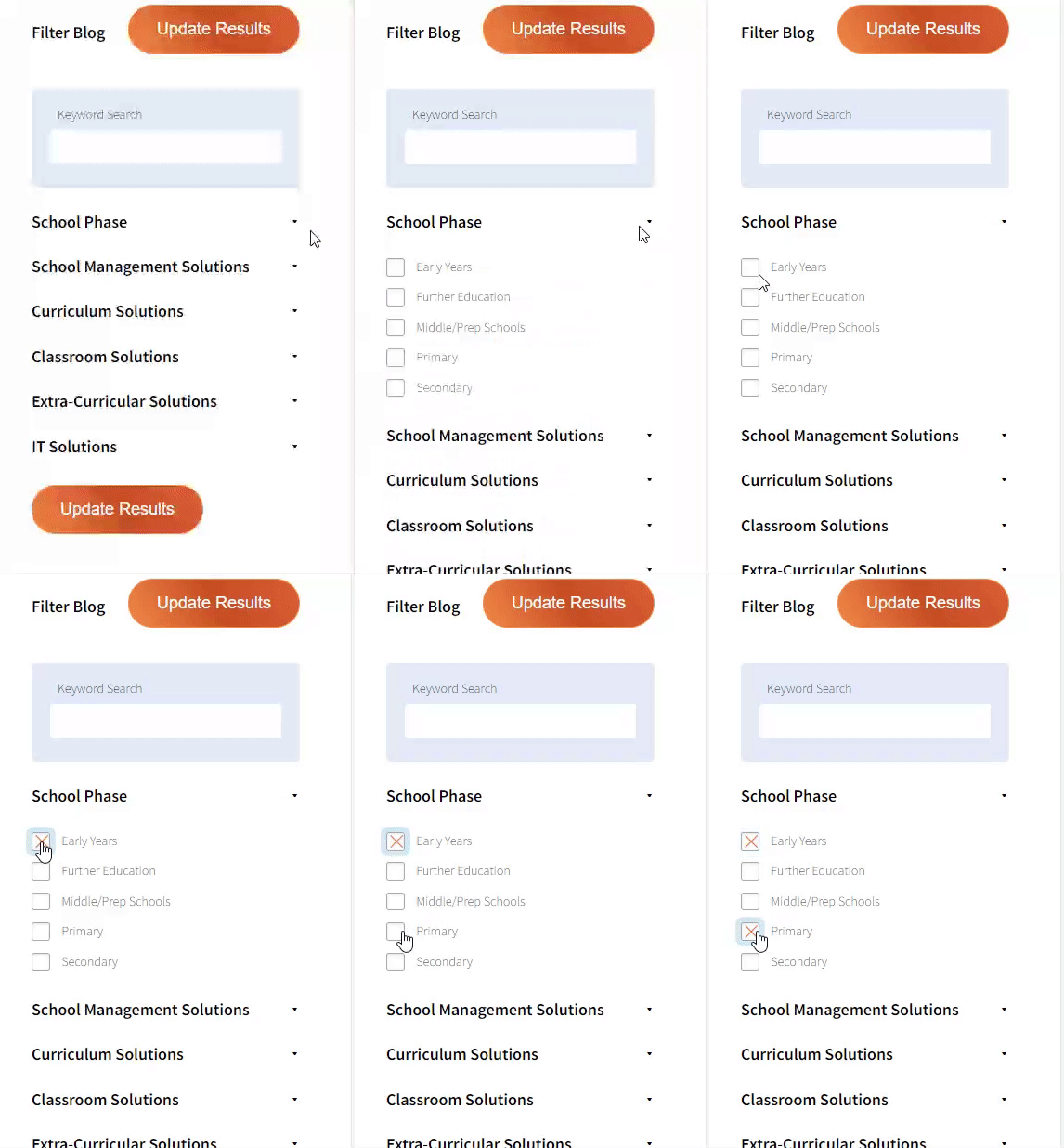
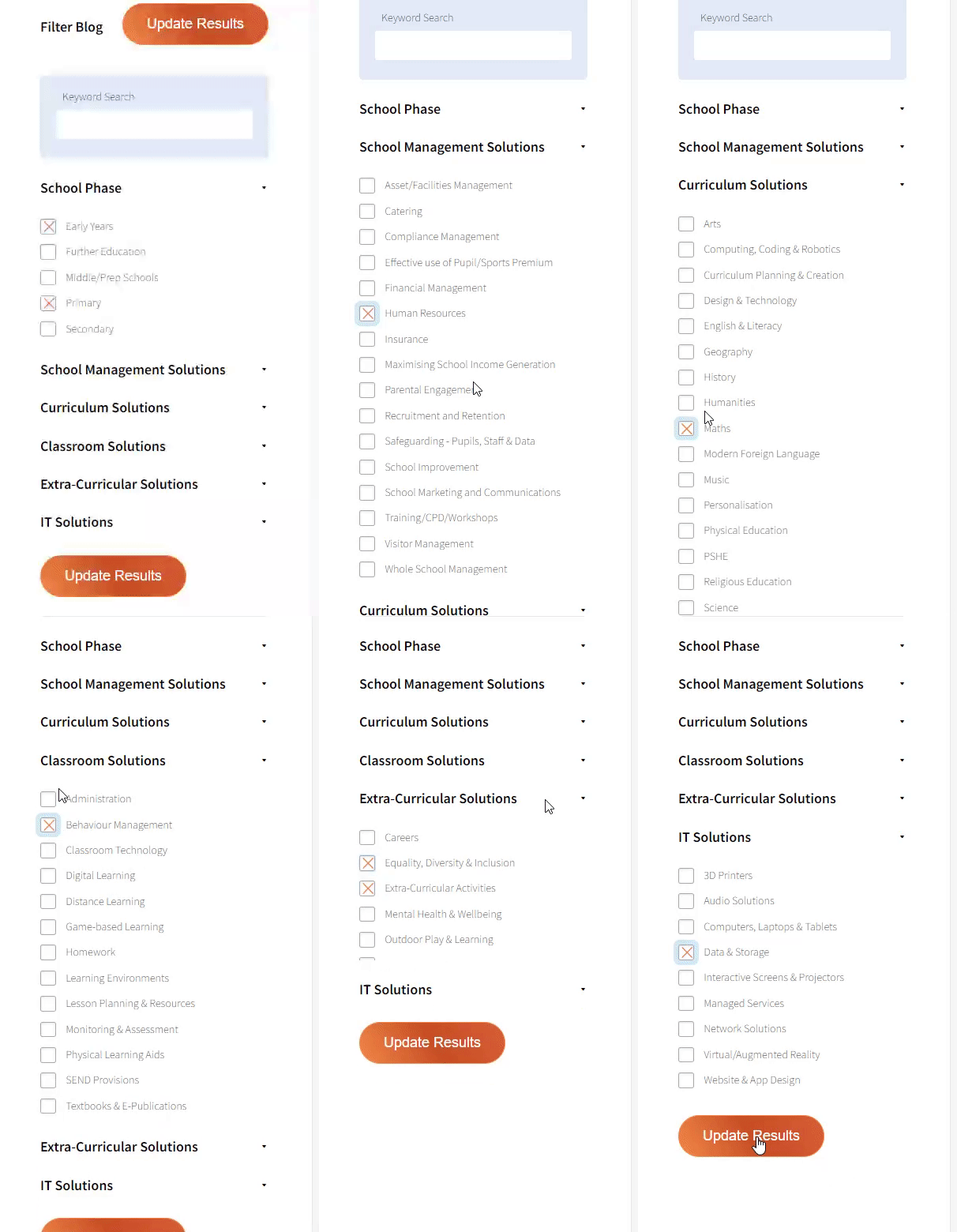
And there you have it! Now your collection of blogs are catered to your chosen topics and are ready for you to explore. Plus, if you frequently return to the same categories you can bookmark your current URL and we will save your choices on return. Happy Reading!
Executive supervision in education is becoming essential. This article explores the emotional cost of leading and why leaders need protected thinking space.
If you’re reading this in July, you’re probably running on fumes. Most leaders are. This is the point in the year where the system quietly leans on your sense of duty to get it over the line. And you do, because you always do, but the cost is obvious to anyone who’s stepped into a school in the last fortnight.
Dr Jon Reid puts it well:
“Education is intellectually and physically demanding, but we don’t always pay enough attention to the emotional demands.”
He’s right. We don’t.
We pretend leaders can absorb everything, the safeguarding, the staffing crises, the parental pressure, the political noise, without consequence. Eventually, though, the strain shows. And when it does, we act surprised.
Between March and July, I supervised a group of Executive Heads and Headteachers. These weren’t inexperienced leaders. They were the ones everyone else leans on. The ones who “cope.”
However, they weren’t coping.
Not really.
They were overloaded.
Not because they lacked skill, but because they had nowhere to put the emotional weight of the job.
Over time, that weight becomes impossible to carry alone.
One leader said something that stopped the room:
“I didn’t realise how much I was firefighting until I finally stopped.”
That’s the problem.
Leaders don’t get to stop. Unless someone creates the space for them, they simply keep going until something gives.
Supervision isn’t therapy, coaching or performance management. Instead, it is the one protected space where leaders can:
Because of this, supervision becomes the only space where they don’t have to hold it together for everyone else.
And yes, sometimes it’s uncomfortable and messy. Even so, it is often the first time many leaders hear their own thoughts without the noise and distraction of leading and managing a school.
For a practical look at how small, intentional behaviours support resilience and culture, my earlier NEXUS article Micro‑Practices in School Leadership explores this in more depth.
By July, leaders are stretched thin.
Not because they’re weak, because the system is relentless. As the term drags on, the emotional cost becomes visible:
Although executive supervision in education doesn’t fix the system, it gives leaders a place to put the weight down long enough to see straight again. Consequently, they regain clarity, steadiness and perspective.
For further insight into leadership wellbeing, Education Support’s annual index is helpful.
If you recognised yourself anywhere in this piece, you’re not the only one. And if the emotional cost of leading has become the part of the job you carry in silence, there is a different way to work, one that doesn’t require you to sacrifice your health, your clarity or your sense of self to keep a school standing.
Executive supervision in education isn’t a luxury.
It’s a safeguard for the people holding the system together.
When September comes, the leaders who have a space to think will be the ones who lead with steadiness, not survival.
You can connect with me on LinkedIn to continue the conversation about executive supervision in education.






Are you looking for solutions? Let us help fund them! Nexus Education is a community of over 11,000 schools that come together to share best pract... View More
Established in 2011, One Education is a company at the heart of the education world, supporting over 600 schools and academies. Our unique appeal a... View More
School Space is a social enterprise that has empowered schools for over 14 years through their profitable and hassle-free lettings services. So far... View More
Unify is an online sales and marketing tool that allows users to create tailored personalised documents in moments. View More
There’s nothing special about the energy we sell. In fact, it’s exactly the same energy as all our competitors provide. But there is something spec... View More
Securus provide market-leading monitoring solutions to safeguard students on ALL devices both online and offline. We also offer a full monitoring s... View More
Robotical makes Marty the Robot - a walking, dancing coding robot that makes programming fun and engaging for learners as young as 5. Our robots co... View More