14-05-2019
06:15
Our team sorts through all blog submissions to place them in the categories they fit the most - meaning it's never been simpler to gain advice and new knowledge for topics most important for you. This is why we have created this straight-forward guide to help you navigate our system.
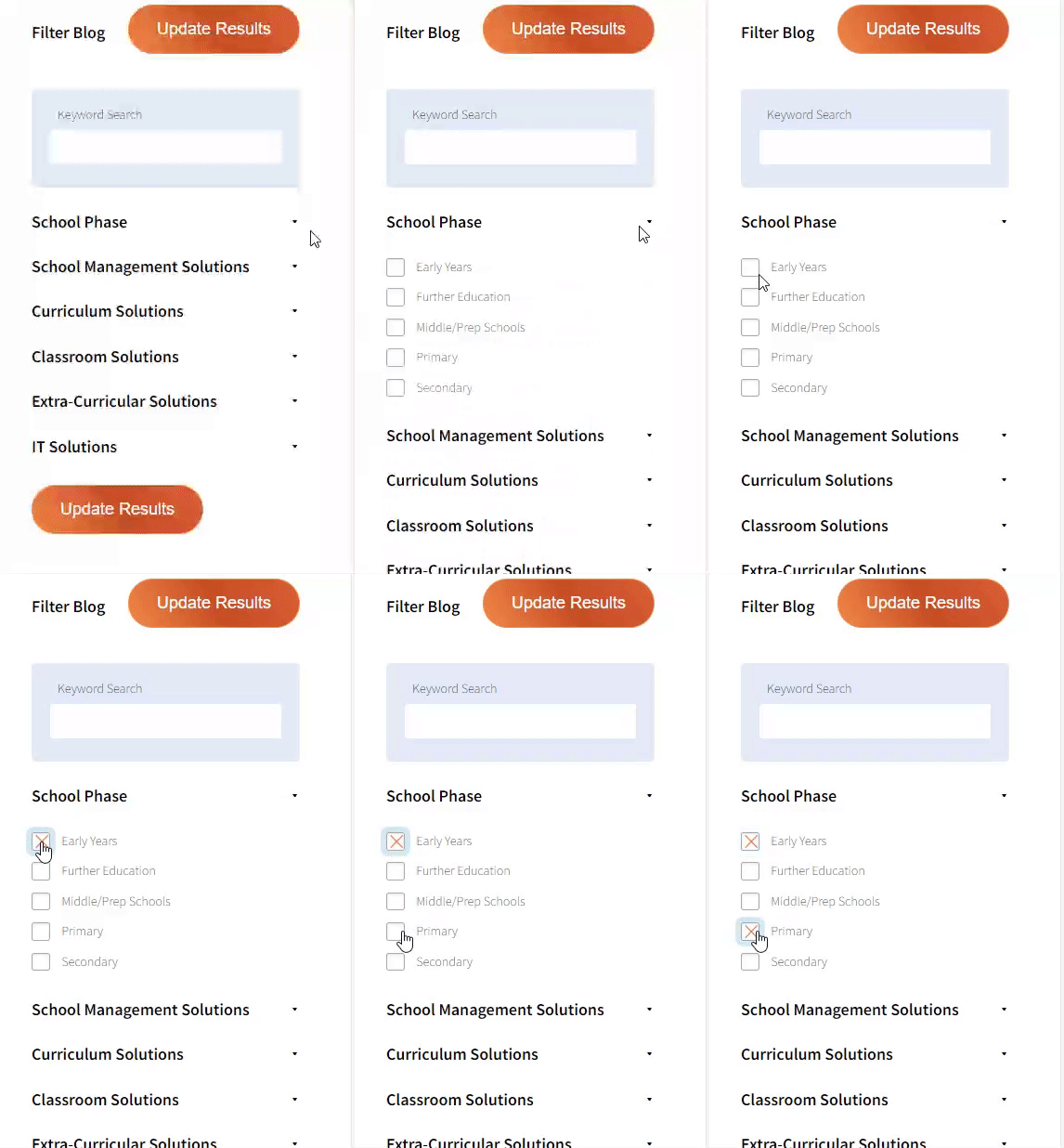
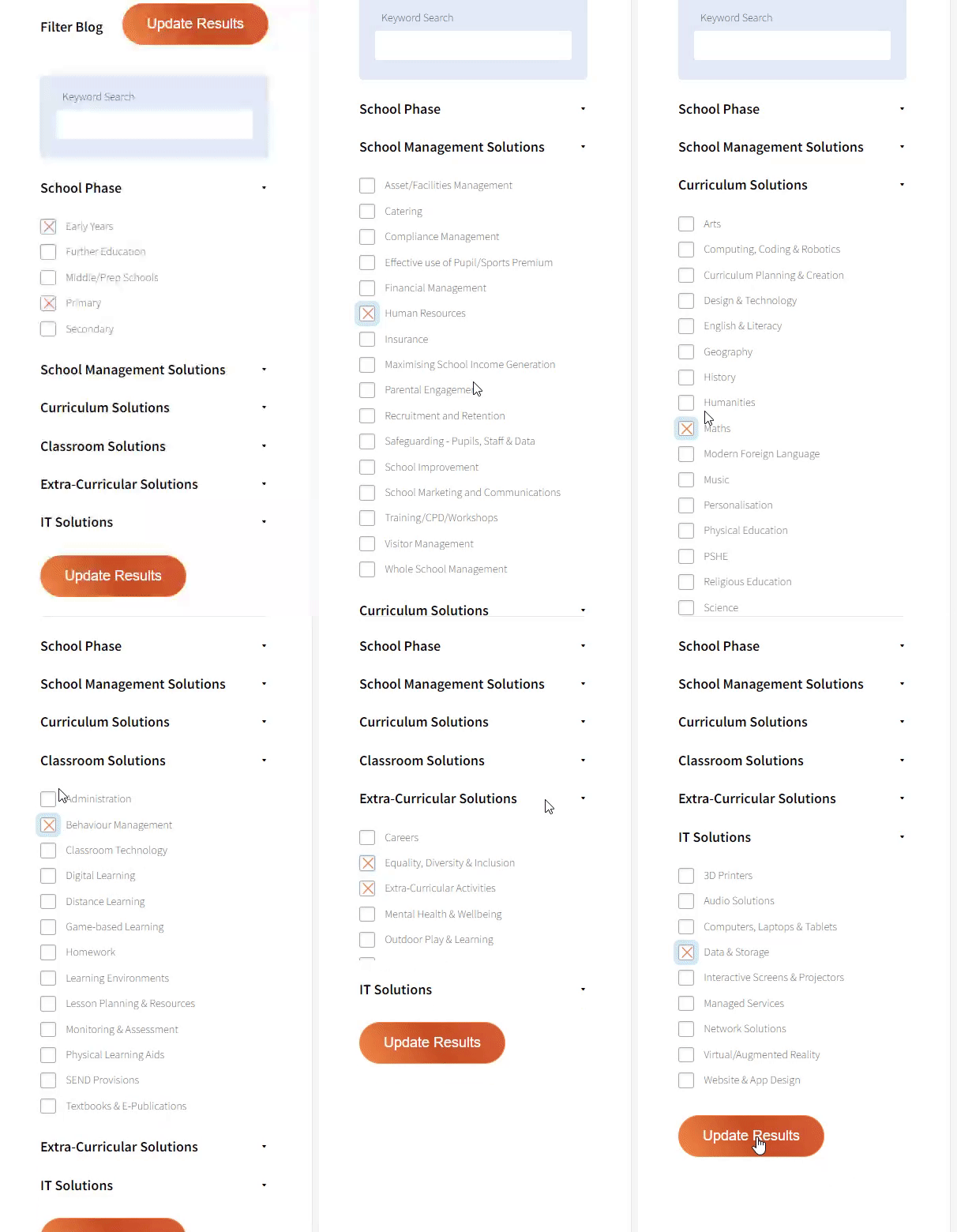
And there you have it! Now your collection of blogs are catered to your chosen topics and are ready for you to explore. Plus, if you frequently return to the same categories you can bookmark your current URL and we will save your choices on return. Happy Reading!
As research increasingly highlights the negative impact of excessive screen use on learning across all year groups, many schools are beginning to shift back toward traditional, hands‑on teaching methods. Yet this transition is not as straightforward as it sounds. After years of professional development, interviews, and lesson observations centred on digital pedagogy, instructors have become heavily reliant on tools such as Kahoot, Padlet, and learning management systems. Now that technology is becoming less central, a key question emerges: which traditional strategies remain meaningful, impactful, and genuinely results‑driven?
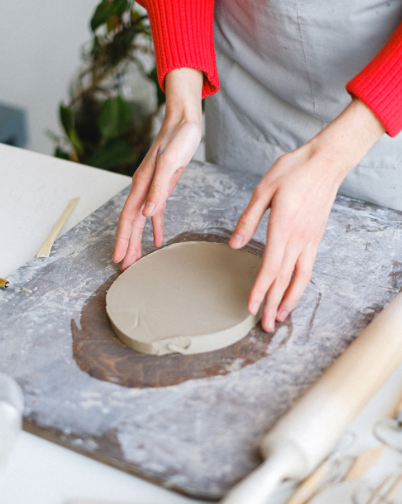
To explore this, I collaborated with an art teacher to design a cross‑curricular lesson that moved beyond textbooks, PowerPoint slides, and discussion‑based tasks. Instead, I integrated sculpture directly into the Psychology curriculum, allowing students to model memory systems using clay. This kinaesthetic approach transformed challenging content into visually engaging, hands‑on learning experiences. As part of the GCSE Psychology specification, students must understand the three long‑term memory systems, and sculpting provides a concrete way to represent their differences. Episodic memory can be modelled as a small “life event” scene containing miniature objects or figures to represent personal, time‑stamped experiences. Semantic memory can be sculpted as an organised knowledge system, such as a library, stack of books, or network of connected nodes; in practice, students particularly enjoyed creating clay maps and tagging capital cities. Procedural memory can be represented through action‑based elements like a hand, tool, or smooth pathway to illustrate learned skills that operate automatically, often resulting in clay instruments or sports equipment. Placing the three sculptures together allows learners to visualise episodic as autobiographical, semantic as factual, and procedural as skill‑based, turning an abstract cognitive concept into a creative revision tool.
For teachers wishing to replicate this lesson, the structure is straightforward. The warm‑up invites students to bring an object that represents a personal memory and share its significance with a partner or the class. The pre‑task involves matching definitions of the memory systems to key terms in small groups to consolidate prior learning. During the main task, students use clay to sculpt each memory type, while the teacher circulates and prompts deeper thinking through targeted questioning. To check learning, students present their sculptures in groups and summarise their models using accurate psychological terminology.
Hands‑on activities using clay and sculpt inject energy into theory‑heavy lessons, support students with additional learning needs, and offer a motivating alternative for learners who may feel stagnant during dense content delivery. Where possible, co‑teaching with an art specialist enhances the experience further, allowing students to paint their sculptures once the clay has dried and fully merging artistic practice with psychological understanding.





Are you looking for solutions? Let us help fund them! Nexus Education is a community of over 11,000 schools that come together to share best pract... View More
Established in 2011, One Education is a company at the heart of the education world, supporting over 600 schools and academies. Our unique appeal a... View More
School Space is a social enterprise that has empowered schools for over 14 years through their profitable and hassle-free lettings services. So far... View More
Unify is an online sales and marketing tool that allows users to create tailored personalised documents in moments. View More
There’s nothing special about the energy we sell. In fact, it’s exactly the same energy as all our competitors provide. But there is something spec... View More
Securus provide market-leading monitoring solutions to safeguard students on ALL devices both online and offline. We also offer a full monitoring s... View More
Robotical makes Marty the Robot - a walking, dancing coding robot that makes programming fun and engaging for learners as young as 5. Our robots co... View More