22-02-2018
07:30
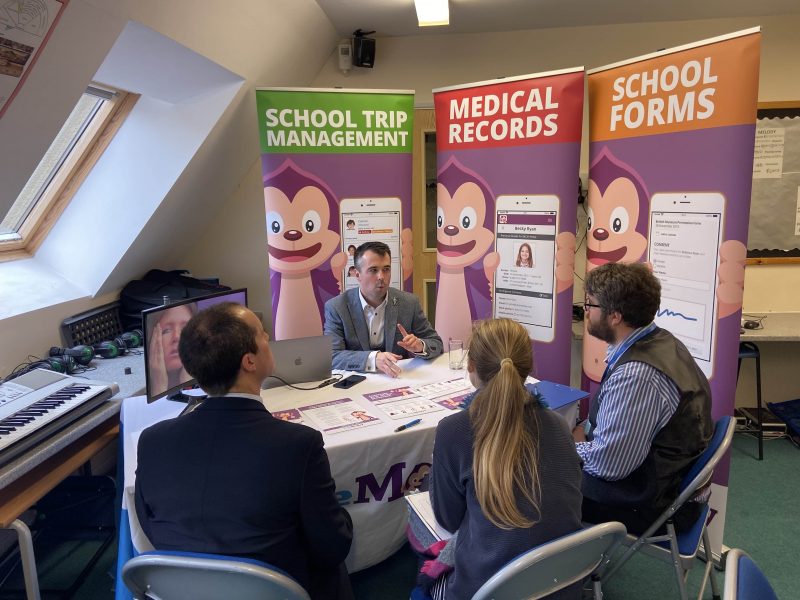
Our team sorts through all blog submissions to place them in the categories they fit the most - meaning it's never been simpler to gain advice and new knowledge for topics most important for you. This is why we have created this straight-forward guide to help you navigate our system.
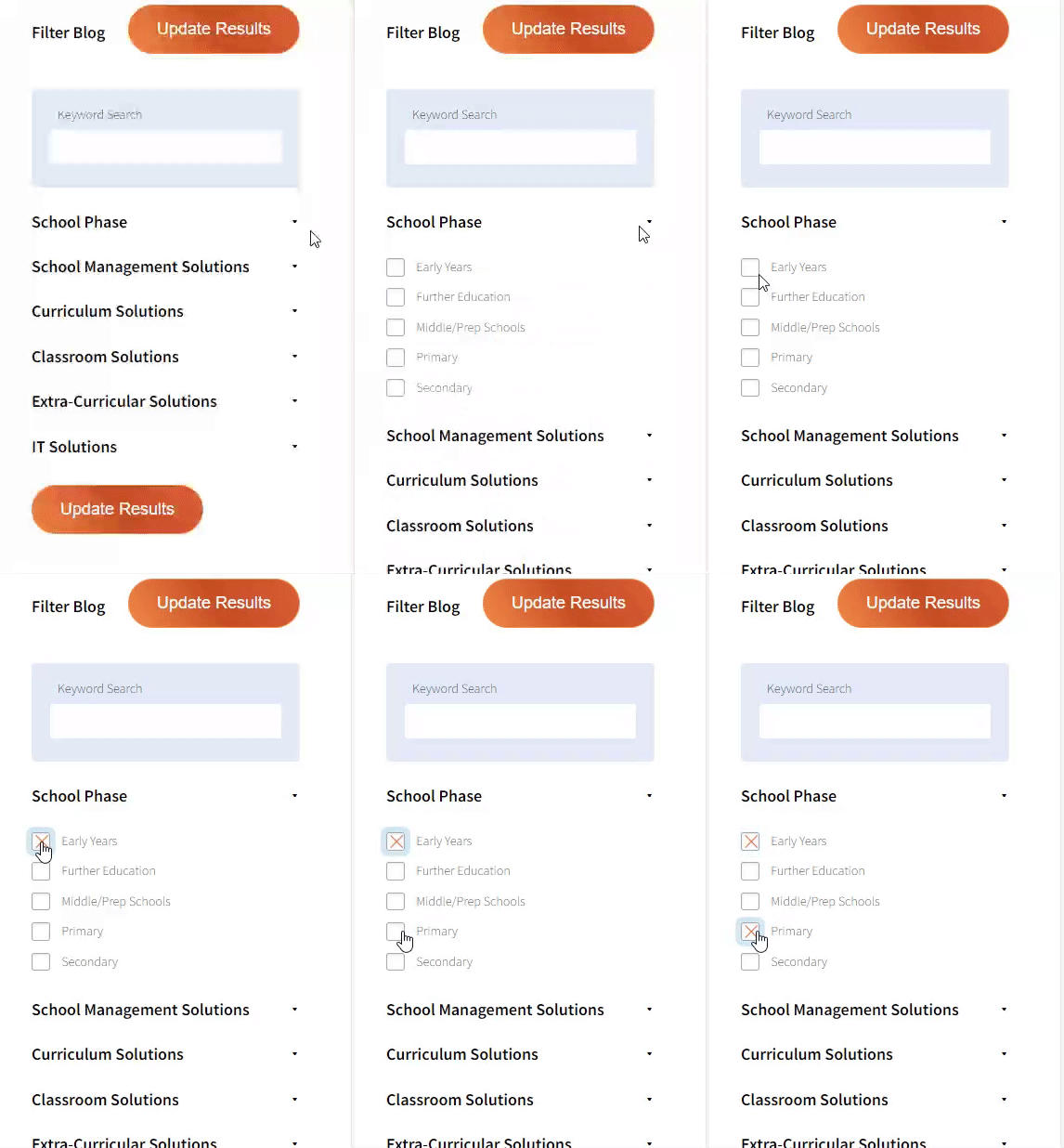
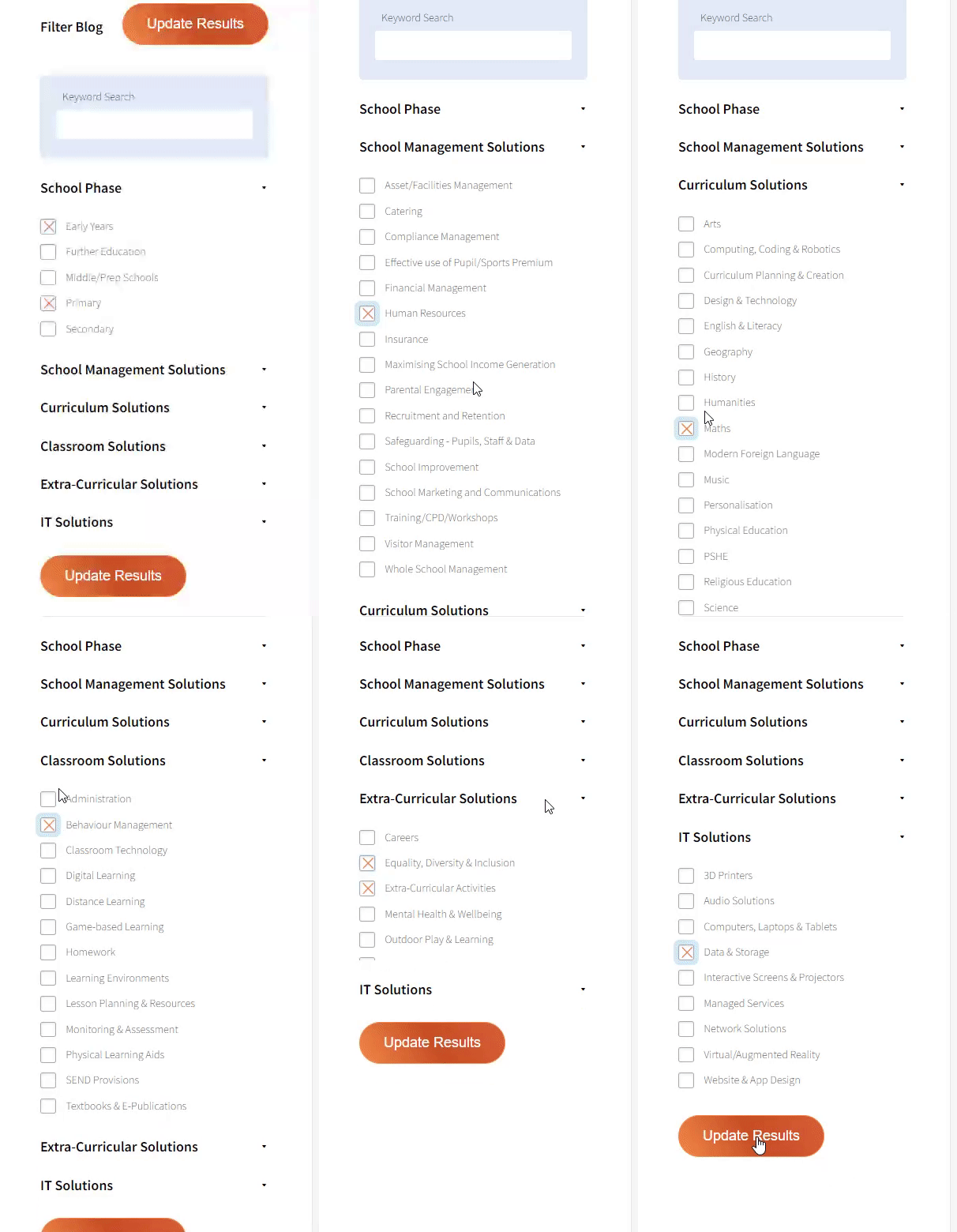
And there you have it! Now your collection of blogs are catered to your chosen topics and are ready for you to explore. Plus, if you frequently return to the same categories you can bookmark your current URL and we will save your choices on return. Happy Reading!

The more time I spend talking to teachers, school leaders, parents and young people, the more I find myself returning to the same question: how much of education is spent rebuilding knowledge that already exists somewhere else?
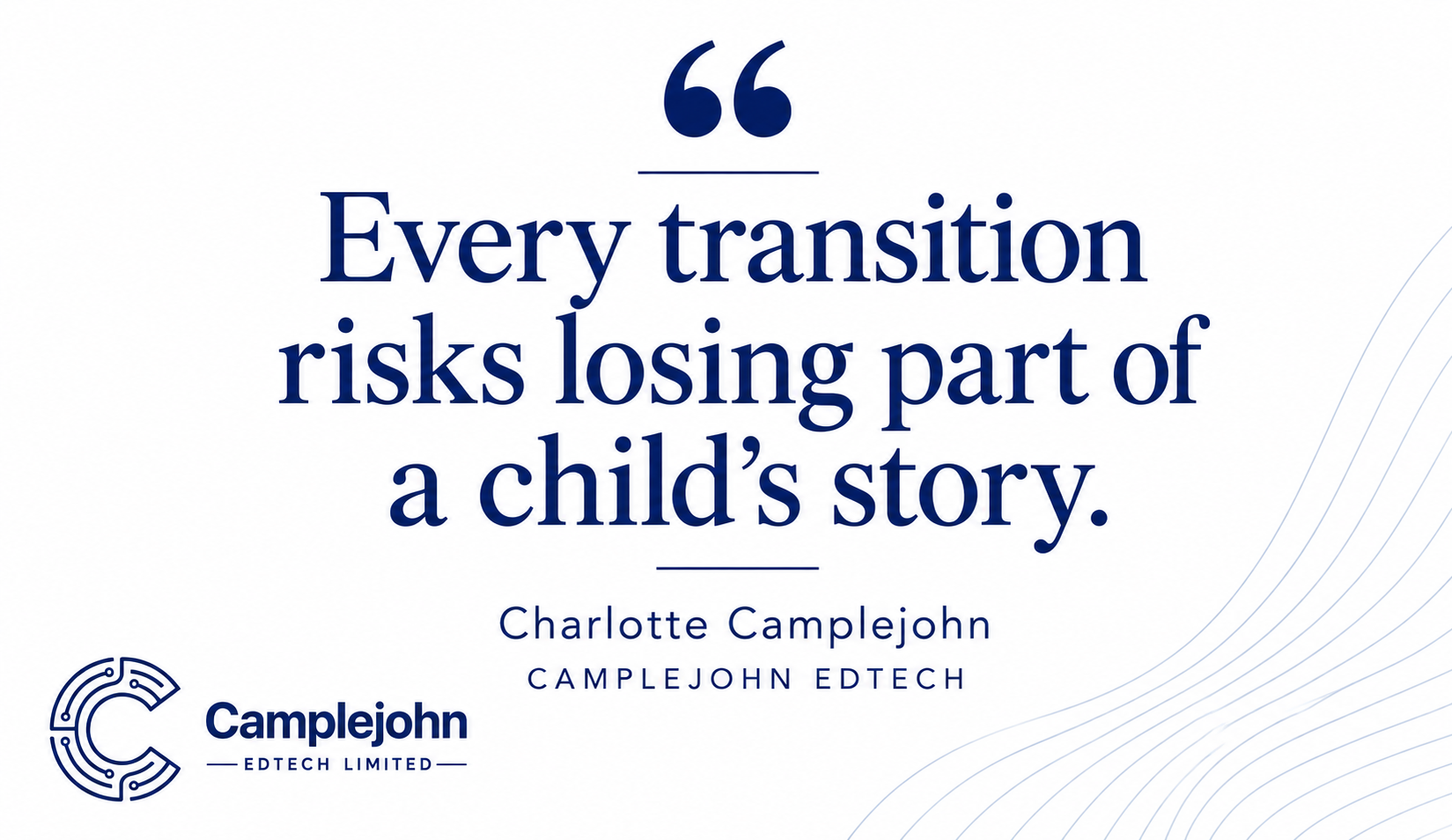
Children move from one class to another, from primary to secondary school, between schools, and sometimes between multiple support services. Teachers change roles, support staff move on, leadership teams evolve, and new systems and initiatives are introduced. Change is a natural and necessary part of education. What concerns me is how often understanding seems to get lost along the way.
Over the years, I have spoken to parents who feel as though they have to explain the same things about their child repeatedly. I have met teachers who spend countless hours entering information into multiple systems and staff who know valuable context about a learner exists somewhere, but struggle to access it when they need it most. These experiences are not usually the result of a lack of care, effort or professionalism. If anything, they often occur despite the enormous commitment shown by those working across education.
At the same time, schools have never collected more information. Data is gathered on attendance, attainment, wellbeing, behaviour, interventions and progress. Reports are written, meetings are held, and records are updated continuously. Yet having access to large amounts of information is not the same thing as maintaining a meaningful understanding of a child or young person over time. Somewhere between the reports, tracking systems, handovers and platforms, important pieces of the picture can become fragmented.
This fragmentation has consequences. It can create additional workload for staff who find themselves duplicating tasks that have already been completed elsewhere. It can lead to frustration for families who feel they are constantly repeating information. Most importantly, it can affect the continuity of support that learners receive throughout their educational journey.
The issue is not simply about technology, although technology is certainly part of the conversation. It is also about how we think about educational journeys and how knowledge moves through systems. How do we ensure that a child’s strengths, interests, challenges and support needs remain visible over time? How do we reduce unnecessary duplication while preserving the human understanding that sits behind the data? How do we make education feel like a connected journey rather than a series of disconnected experiences?
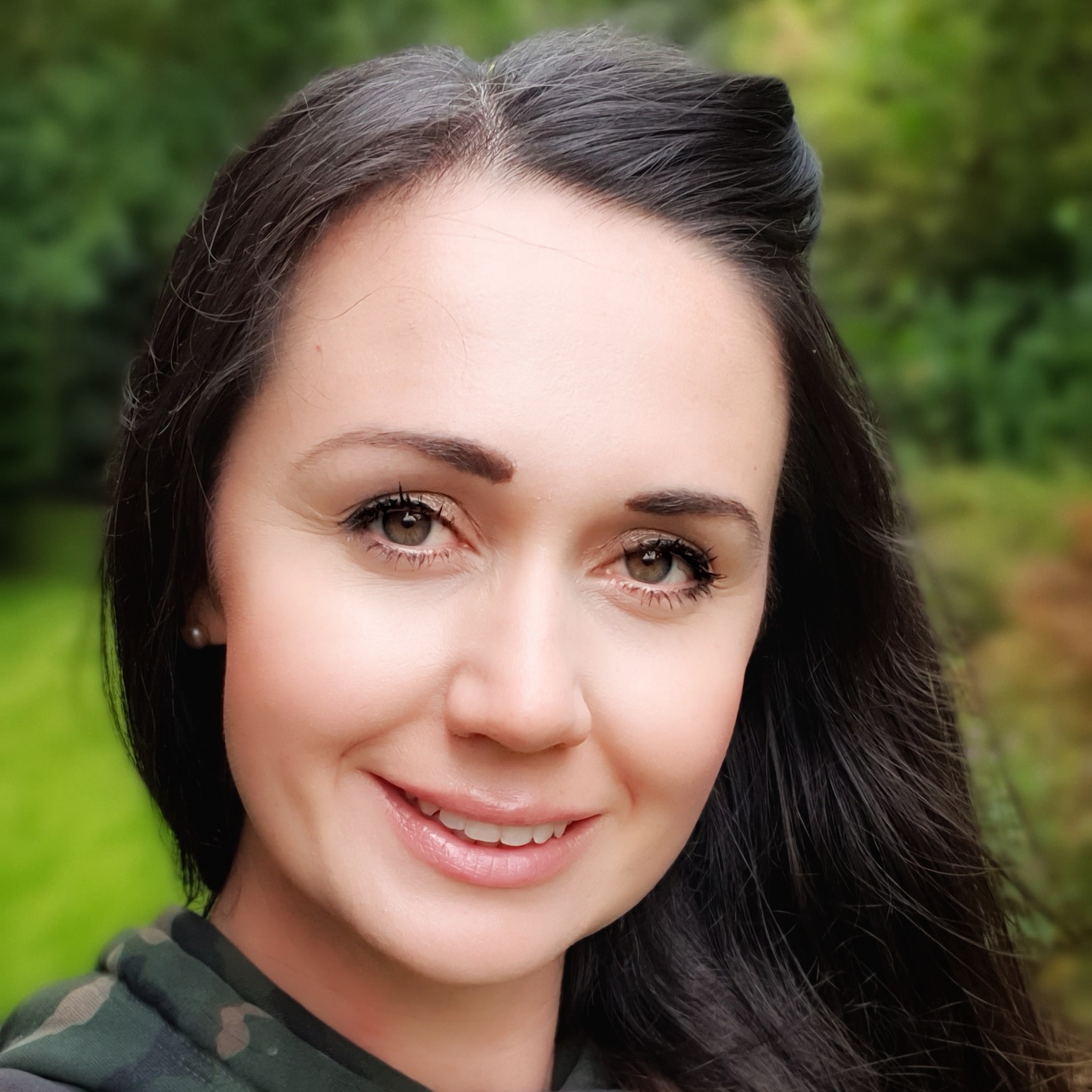
These questions have become increasingly important to me through my work as a researcher, former Chair of Governors, parent and, more recently, through developing educational tools with Camplejohn EdTech. The more I explore these issues, the more I hear similar concerns from people working in different roles and phases of education. Although the specific challenges vary, there is often a common theme: too much valuable knowledge is being lost, repeated or fragmented as learners move through the system.
This feels particularly significant at a time when schools are facing considerable pressures. Workload remains a major concern, resources are stretched, and expectations continue to grow. At the same time, the world young people are preparing to enter is changing rapidly. Schools are being asked to support learners in increasingly complex ways while also preparing them for futures that are difficult to predict. In that context, continuity, coherence and meaningful understanding matter more than ever.
I am interested in exploring whether others are seeing the same patterns. Where does education feel most fragmented? What information is most often lost? What creates the greatest duplication of effort? What aspects of learners’ experiences are not being captured or carried forward effectively? Perhaps most importantly, what are we overlooking?
This short survey is part of that exploration. It is not a sales exercise, and there is no predetermined conclusion I am trying to reach. My aim is simply to understand how these issues are experienced by people working in and around education and to identify the areas where greater continuity and coherence might make a meaningful difference.
If you have five minutes to spare, I would be hugely grateful for your perspective. Meaningful change often starts with listening carefully to the experiences of those closest to the challenges, and I hope this survey provides an opportunity to do exactly that.



Are you looking for solutions? Let us help fund them! Nexus Education is a community of over 11,000 schools that come together to share best pract... View More
Established in 2011, One Education is a company at the heart of the education world, supporting over 600 schools and academies. Our unique appeal a... View More
School Space is a social enterprise that has empowered schools for over 14 years through their profitable and hassle-free lettings services. So far... View More
Unify is an online sales and marketing tool that allows users to create tailored personalised documents in moments. View More
There’s nothing special about the energy we sell. In fact, it’s exactly the same energy as all our competitors provide. But there is something spec... View More
Securus provide market-leading monitoring solutions to safeguard students on ALL devices both online and offline. We also offer a full monitoring s... View More
Robotical makes Marty the Robot - a walking, dancing coding robot that makes programming fun and engaging for learners as young as 5. Our robots co... View More