
11-06-2024
04:37
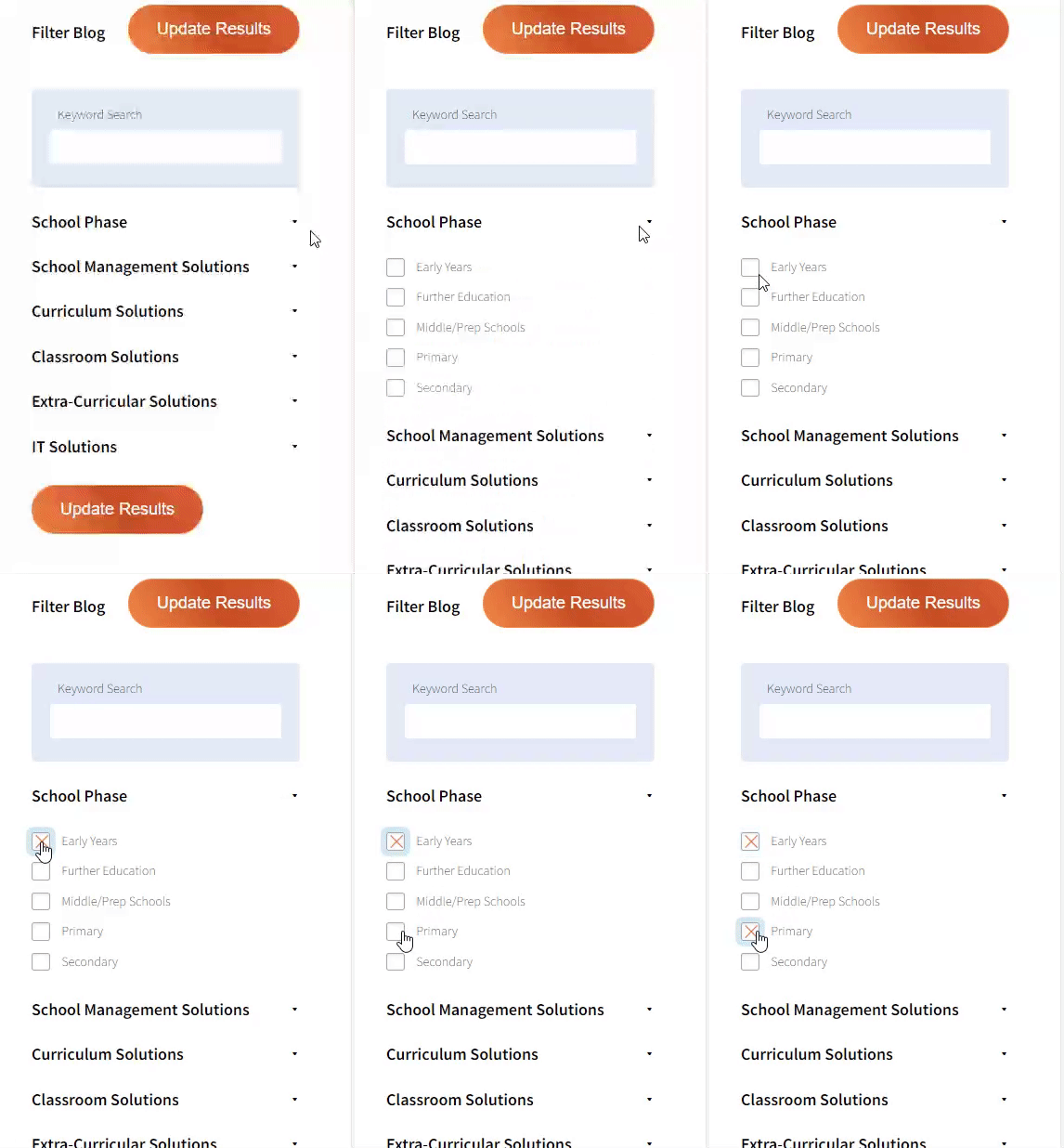
Our team sorts through all blog submissions to place them in the categories they fit the most - meaning it's never been simpler to gain advice and new knowledge for topics most important for you. This is why we have created this straight-forward guide to help you navigate our system.
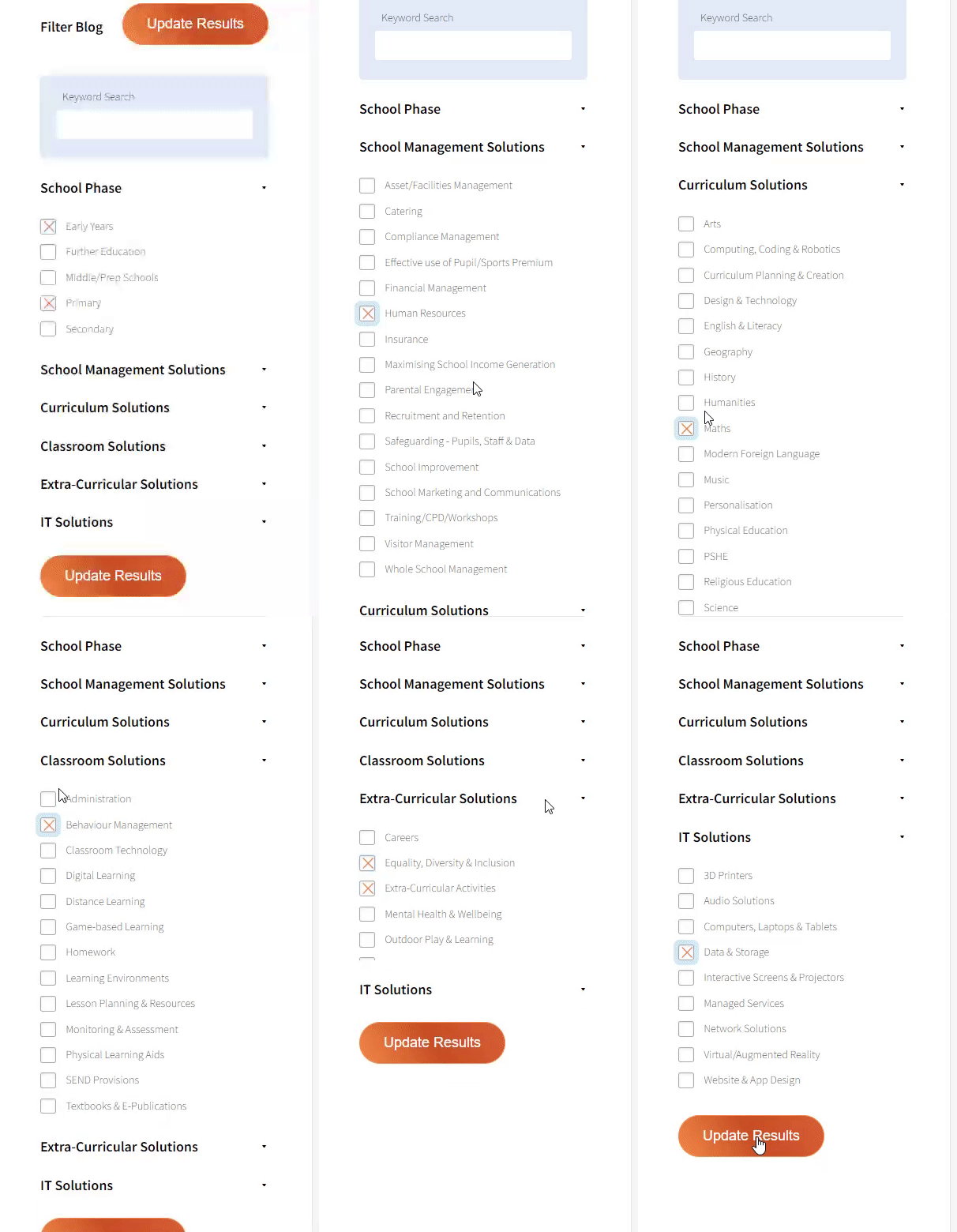
And there you have it! Now your collection of blogs are catered to your chosen topics and are ready for you to explore. Plus, if you frequently return to the same categories you can bookmark your current URL and we will save your choices on return. Happy Reading!
You can choose your friends but you sho’ can’t choose your family (Lee, 1960)
As we hurtle towards the Christmas break, we would add a caveat to Harper Lee’s observation and that is that you can’t choose your co-workers either…. Or to put it another way; it’s very difficult to choose your work family.

On average teachers in the UK work almost 53 hours a week (DfE 2024) and with the Autumn Term often the longest of the year, it is no surprise that illness, feelings of fatigue and disillusionment with colleagues and processes can flourish (TES 2019). Within a maelstrom of tired bodies and minds, the need to stay professional with colleagues you are thrown together with, rather than actively chose, is paramount. However, niggles and grievances flourish in these situations so to help tired and stressed colleagues everywhere, we have devised our four golden rules for surviving at work at this time, with a nod to Harper Lee:
Rule 1: You never really understand a person until you consider things from his point of view (Lee, 1960)
Our frames of reference are everywhere. How we think, what we do, where we sit in the staffroom, what mug we pick up. So much of our lives is predetermined by our brain, a brain that as we head towards Christmas, becomes increasingly fixed on autopilot.
Our rule stresses the importance of self-awareness. As our tiredness levels creep up we are likely to become increasingly irritated by the actions of others, how their approach differs from ours, their verbal tics, their mannerisms, even carelessly worded emails have the ability to enrage. But turning this around, if we are upset by the actions of others, then the likelihood is that our own approaches are going to elicit a similar response from others, so our rule is to be aware of this and try to look at how others perceive you.
Rule 2: Many receive advice, only the wise profit from it (Lee, 1960)
As educators we are constantly subjected to feedback on our performance. The success or otherwise of our classes can be gauged by looking at our students and the metrics that judge us give us indicators of perceived success. In addition, regular appraisals, team meetings and informal chats provide evidence of how we are seen to be doing.
This level of feedback can be exhausting. Measures can sometimes be contradictory, fluctuate widely and be highly subjective in nature and so there is a natural tendency to blank them out or use confirmatory bias to focus solely on those that back up your current view on your performance and work in general. Our rule encourages you to take a step back from the day-to-day feedback and look at the overall picture, be proactive by focusing on areas for development rather than being reactive to individual moments. Most of all, remember to celebrate success and make sure that everyone involved is included in the celebration.
Rule 3: I am too busy with my own problems (Lee, 1960)
Some days are a struggle, as tiredness creeps in, it is easy to overreact to issues and to withdraw into your own world. Whilst it is too simplistic to merely quote the maxim that a problem shared is a problem shared, open communication about problems can lighten both the mental and the organisational load. An outside perspective can open up new solutions and often talking through issues means that what seemed impenetrable to one person alone, feels eminently solvable when more people are involved.
Of course it works the other way as well, supporting colleagues with their problems can help them to move an issue forward but it also shows you that you are not alone in facing issues and this can be of great comfort when confronted by a deluge of issues. So our message to you is to talk to colleagues, work collegiately and that way we might well appreciate the differing perspectives we all bring.
Rule 4: The book to read is not the one which thinks for you, but the one which makes you think (Lee, 1960)
Our final rule is inspired not only by another Harper Lee quote but also by the cry of vive la difference! The world would be so much less interesting if we were all the same and whilst differences can lead to confusion, non-comprehension and annoyance when things are not done in the way in which you would do them, the alternative feels so much less palatable.
Living in a homogenised echo chamber where everyone agrees with each other and a lack of differing views can be comforting for a period of time but eventually it leads to stagnation and boredom. Our rule urges you to listen to other people, hear what they have to say and think about how their views can influence your own.
So, as we countdown to Christmas, fighting tiredness and sometimes our colleagues, our message is, try to follow these rules and enjoy the break.
References
Department for Education (2024) Working Lives of Teachers and Leaders, available at: Working lives of teachers and leaders: wave 2 summary report – GOV.UK (accessed 9th December 2025)
Lee, H (1960) To Kill a Mockingbird, London: HarperCollins
TES (2019) Autumn Term is the NQT slayer, available at: ‘Autumn term is the NQT slayer’ | Tes Magazine (accessed 9th December 2025)









Are you looking for solutions? Let us help fund them! Nexus Education is a community of over 11,000 schools that come together to share best pract... View More
Established in 2011, One Education is a company at the heart of the education world, supporting over 600 schools and academies. Our unique appeal a... View More
School Space is a social enterprise that has empowered schools for over 14 years through their profitable and hassle-free lettings services. So far... View More
Unify is an online sales and marketing tool that allows users to create tailored personalised documents in moments. View More
There’s nothing special about the energy we sell. In fact, it’s exactly the same energy as all our competitors provide. But there is something spec... View More
Securus provide market-leading monitoring solutions to safeguard students on ALL devices both online and offline. We also offer a full monitoring s... View More
Robotical makes Marty the Robot - a walking, dancing coding robot that makes programming fun and engaging for learners as young as 5. Our robots co... View More