27-09-2019
10:58
Our team sorts through all blog submissions to place them in the categories they fit the most - meaning it's never been simpler to gain advice and new knowledge for topics most important for you. This is why we have created this straight-forward guide to help you navigate our system.
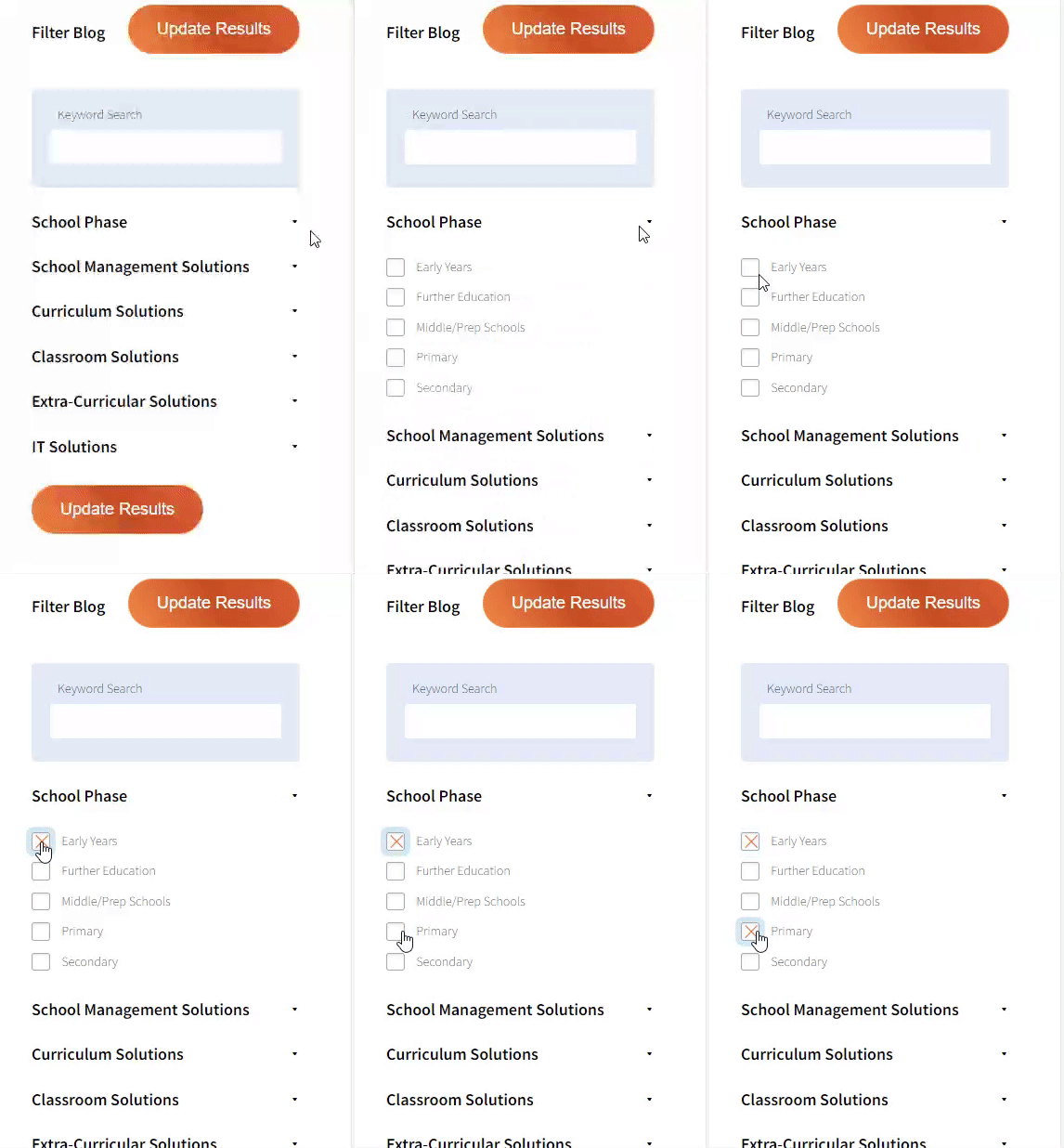
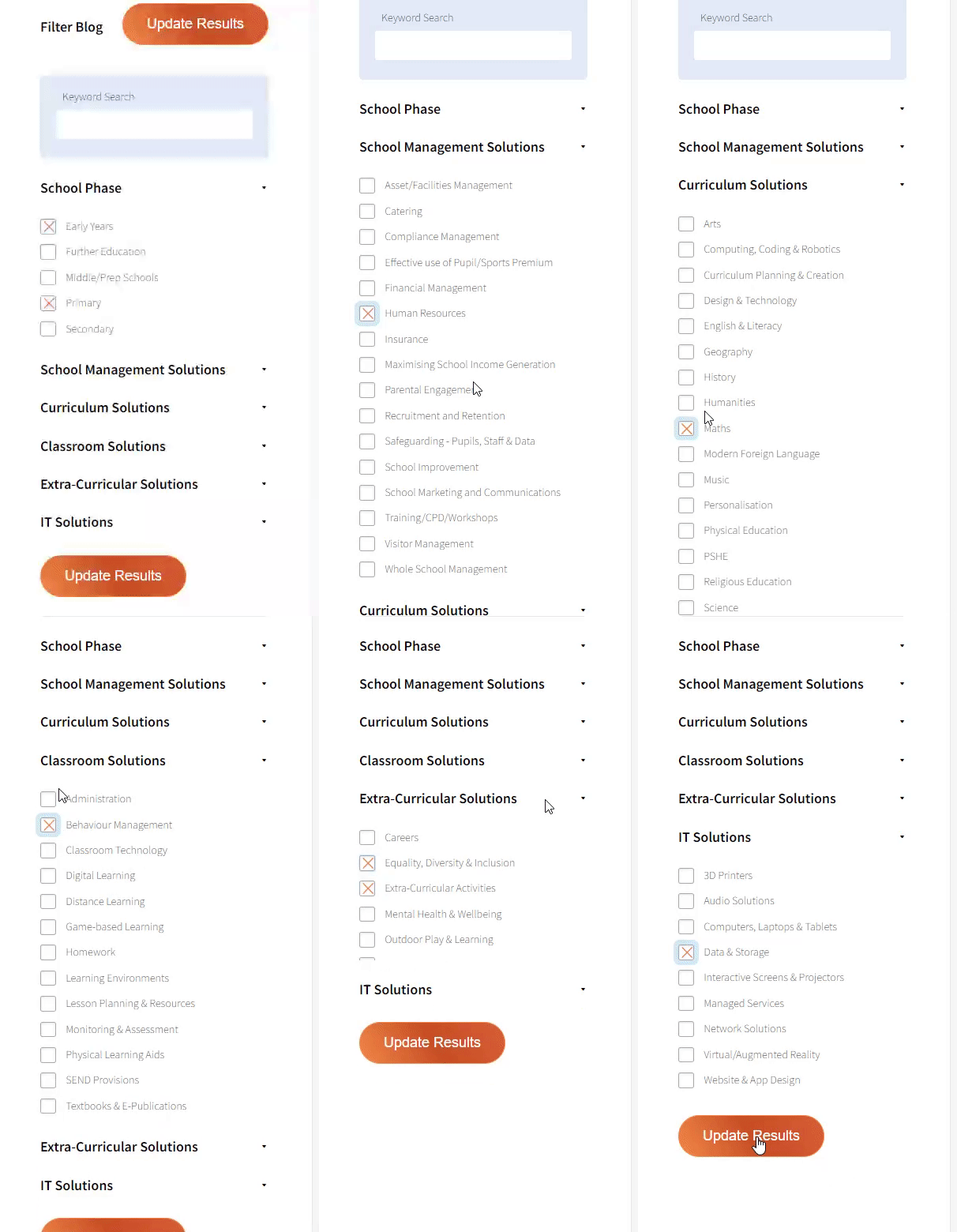
And there you have it! Now your collection of blogs are catered to your chosen topics and are ready for you to explore. Plus, if you frequently return to the same categories you can bookmark your current URL and we will save your choices on return. Happy Reading!
In classrooms across the country, behaviour isn’t just a set of choices — it’s often a language pupils use to tell us something is going on beneath the surface. Traditional consequences can sometimes address what a pupil did, but they rarely get to why it happened or how to support the child, so it doesn’t arise again. That’s where restorative conversations come in. As ‘O’ Brien 2018 identifies restorative practices create space and time for harm caused to be communicated and to start the process to heal the relationship. They are not a ‘soft option’, but a powerful tool for rebuilding relationships, reflecting on actions, and growing emotional literacy.

It’s important to stress that this isn’t about “letting them off”; it’s about equipping pupils with the skills and awareness to make better decisions next time — an investment in long-term behaviour change, not a quick fix.
Across many schools, restorative conversations are guided by a set of core questions. These prompts help teachers sensitively steer the discussion while giving the pupil space to reflect:
These questions create a narrative arc from event to impact to solution– and they position the pupil as an active agent in their learning and behaviour.
Restorative conversations should be calm, respectful, and private- away from peers and the pressure of the moment. They’re most effective when pupils have had time to self-regulate first, rather than being pulled straight into a discussion while still dysregulated.
Let’s be honest: a lot of behaviour stems from unrecognised or unarticulated emotions. A pupil who lashes out might be scared, overwhelmed, tired, or frustrated — and they may not have the vocabulary or confidence to say so. That’s why emotional literacy is at the heart of restorative practice.
Empowering pupils to recognise and communicate how they feel builds stronger relationships and helps to prevent conflict in the first place. Research and classroom experience both point to the importance of helping pupils name, understand and express emotions- “happy”, “sad”, “angry”, “scared” and more- as a foundation for behaviour that supports learning.
This is where creative classroom tools like My Mood Stars become more than just pretty resources- they become bridges between feeling and word.
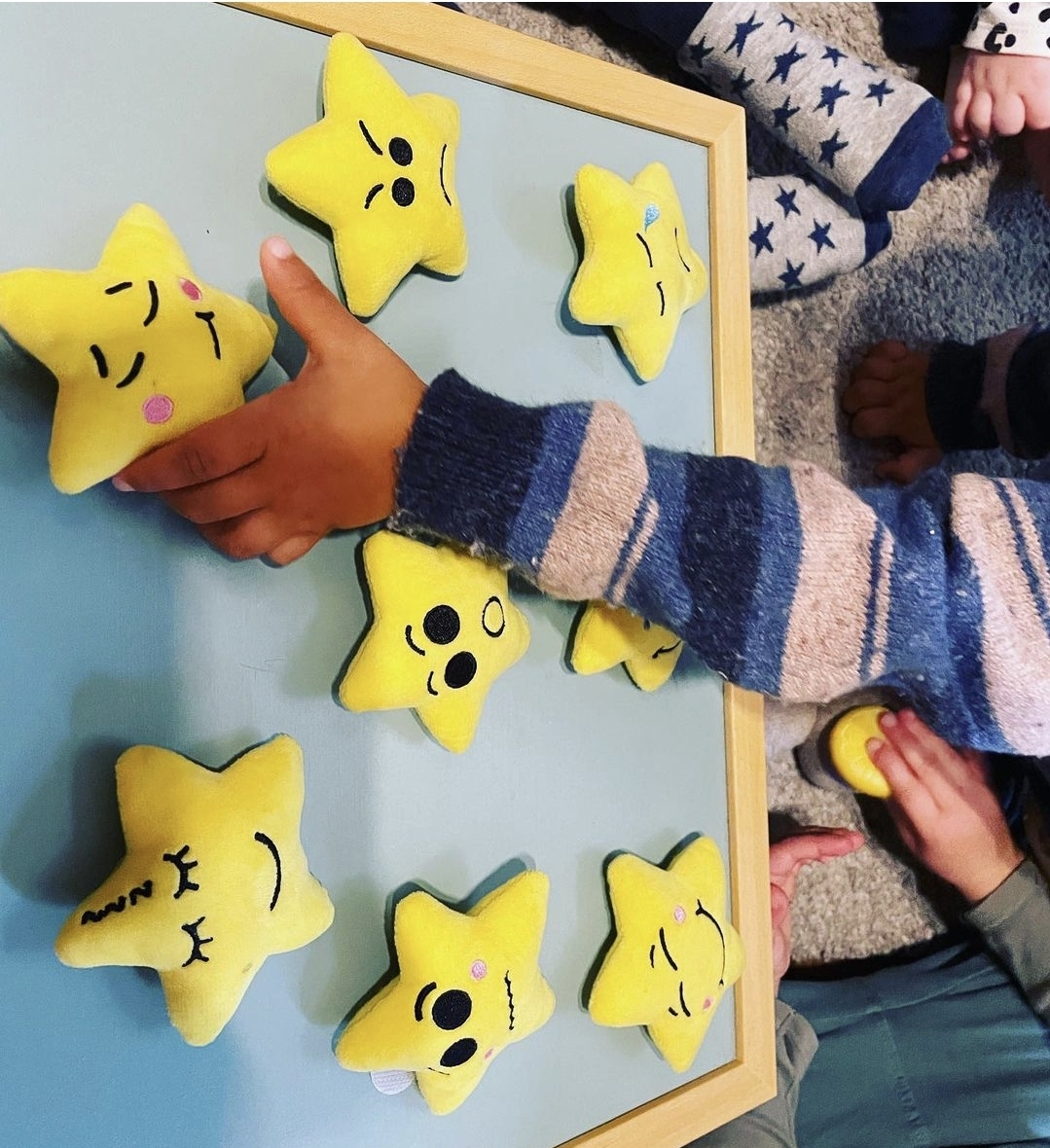
My Mood Stars are eight soft, tactile stars that depict emotions such as Happy, Sad, Angry, Scared, Timid, Silly, Sleepy and Surprised. They’re designed to help children recognise and talk about what they’re feeling.
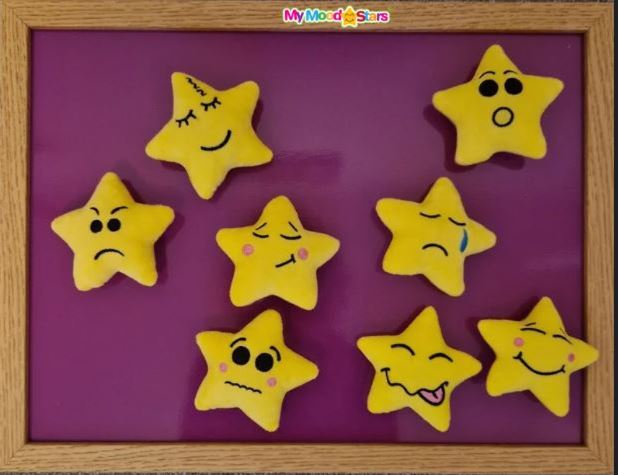
Here’s how you can use them to enhance restorative conversations:
1. Emotion Check-In Before the Talk
Before starting a restorative conversation, ask the pupil to choose a Mood Star that matches how they felt at the time of the incident and how they feel now. This gives you a clear emotional entry point and helps reduce resistance for pupils who struggle to express feelings verbally.
This checks in body and mind– recognising that behaviour isn’t just a choice but an expression of emotional state.
2. Visualising the Impact
Use two stars- one for the pupil, one representing others affected (even you). Having pupils physically place or hold the stars adds a non-threatening visual anchor to the discussion. It helps them connect the dots between internal experience and external impact (e.g., “When I was Angry Star, I shouted and that made others feel Sad Star”).
3. Supporting Pupils With SEND
Some pupils find it particularly difficult to articulate feelings or maintain eye contact during reflective dialogue. Mood Stars give them a symbolic language to communicate without pressure- especially useful for pupils on the autism spectrum or with language barriers.
4. Follow-Up Planning
Once the pupil has identified emotions with the stars and spoken about them, you can reference the stars again during goal-setting. For instance: “Next time you feel Timid Star before a group task, what could you do to stay calm?” This bridges emotion recognition and future behaviour strategies.
By integrating Mood Stars into restorative chats, you keep the focus on learning from the behaviour, not just recording it.
Restorative conversations shouldn’t be a bolt-on or something that only happens after extreme incidents. They work best when they’re part of a whole-school culture where relationship, empathy, and reflection are the default. Teachers should lead with curiosity, not accusation- because when pupils feel heard and understood, they’re far more likely to engage in reflection and change.
Remember: restorative practice is about repairing harm and building capacity, not about proving guilt or blame. With tools like My Mood Stars, we give pupils both the language and the safe space to explore their emotions, making restorative conversations more meaningful, accessible and effective.
After all, we aren’t just teaching behaviour- we’re teaching humans how to understand themselves and each other.
O’Brien, J. (2018) Better behaviour: a guide for teachers. Los Angeles: SAGE.





Are you looking for solutions? Let us help fund them! Nexus Education is a community of over 11,000 schools that come together to share best pract... View More
Established in 2011, One Education is a company at the heart of the education world, supporting over 600 schools and academies. Our unique appeal a... View More
School Space is a social enterprise that has empowered schools for over 14 years through their profitable and hassle-free lettings services. So far... View More
Unify is an online sales and marketing tool that allows users to create tailored personalised documents in moments. View More
There’s nothing special about the energy we sell. In fact, it’s exactly the same energy as all our competitors provide. But there is something spec... View More
Securus provide market-leading monitoring solutions to safeguard students on ALL devices both online and offline. We also offer a full monitoring s... View More
Robotical makes Marty the Robot - a walking, dancing coding robot that makes programming fun and engaging for learners as young as 5. Our robots co... View More
As a group, Fusion Education People Solutions provide innovative HR Services and Software (SAM, SAMpeople and FACE-Ed), developed specifically for ... View More