07-02-2018
06:22
Our team sorts through all blog submissions to place them in the categories they fit the most - meaning it's never been simpler to gain advice and new knowledge for topics most important for you. This is why we have created this straight-forward guide to help you navigate our system.
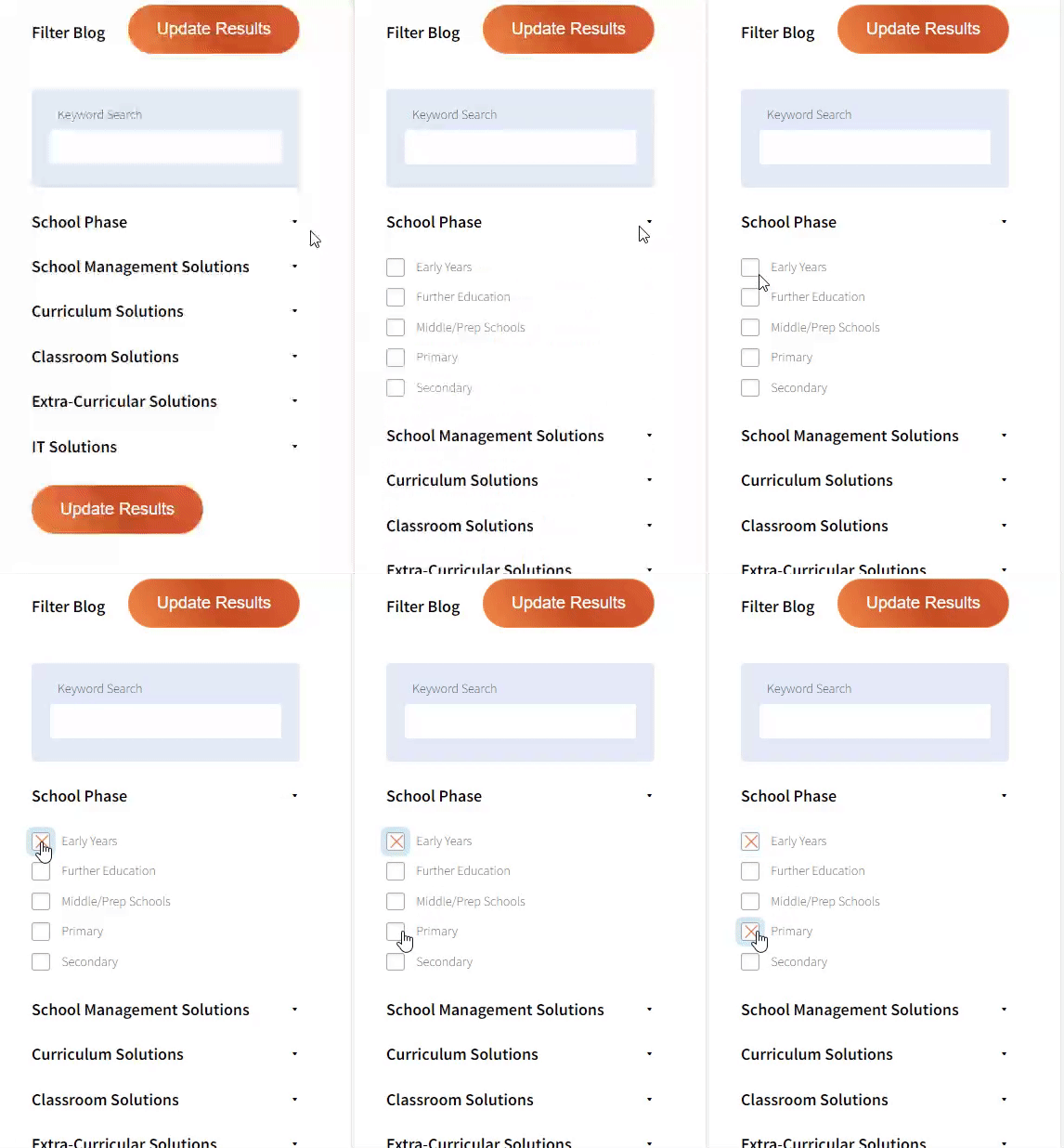
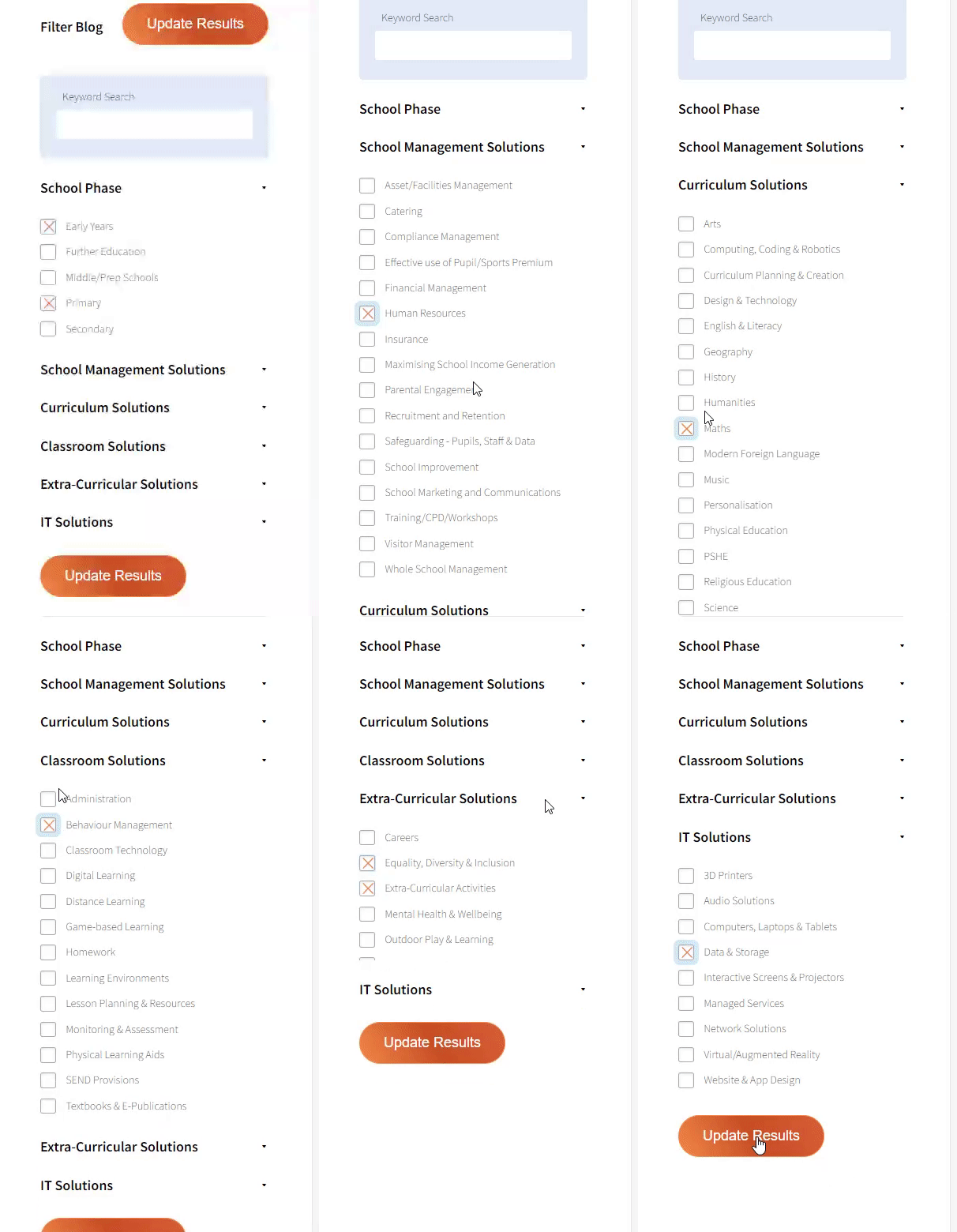
And there you have it! Now your collection of blogs are catered to your chosen topics and are ready for you to explore. Plus, if you frequently return to the same categories you can bookmark your current URL and we will save your choices on return. Happy Reading!
Supporting pupils who are learning with English as an Additional Language (EAL) and Pupils who are non verbal to Communicate Emotions (with a little help from My Mood Stars).
If you’ve ever looked at a pupil and thought, “I know something’s up, but I’ve no idea what,” you’re not alone.
For pupils learning with EAL and those who are non-verbal, that gap between feeling and expressing can feel enormous. They may understand far more than they can say, but without a safe way to show you how they’re feeling, emotions leak out as “behaviour”, withdrawal, or complete shutdown.
The good news: we can absolutely build bridges for them. And we don’t need anything fancy or complicated – just consistent routines, visual tools, and a lot of patience.
One resource that I have recently started using is My Mood Stars – a set of eight soft, hand-sized plush stars, each showing a different emotion (happy, sad, scared/worried, timid, sleepy, surprised/shocked, silly and angry). They’re designed to be tactile, gender-neutral and race-neutral, so the focus stays on the emotion rather than on the character.

Here’s how you can support your EAL and non-verbal learners to communicate their emotions, using things like My Mood Stars as part of your everyday classroom practice.
Before we think about naming emotions in English, we need pupils to feel safe enough to show them.
If a pupil doesn’t feel secure, they won’t risk showing vulnerability – especially if they don’t yet have the words.
This is where My Mood Stars (or similar resources) shine.
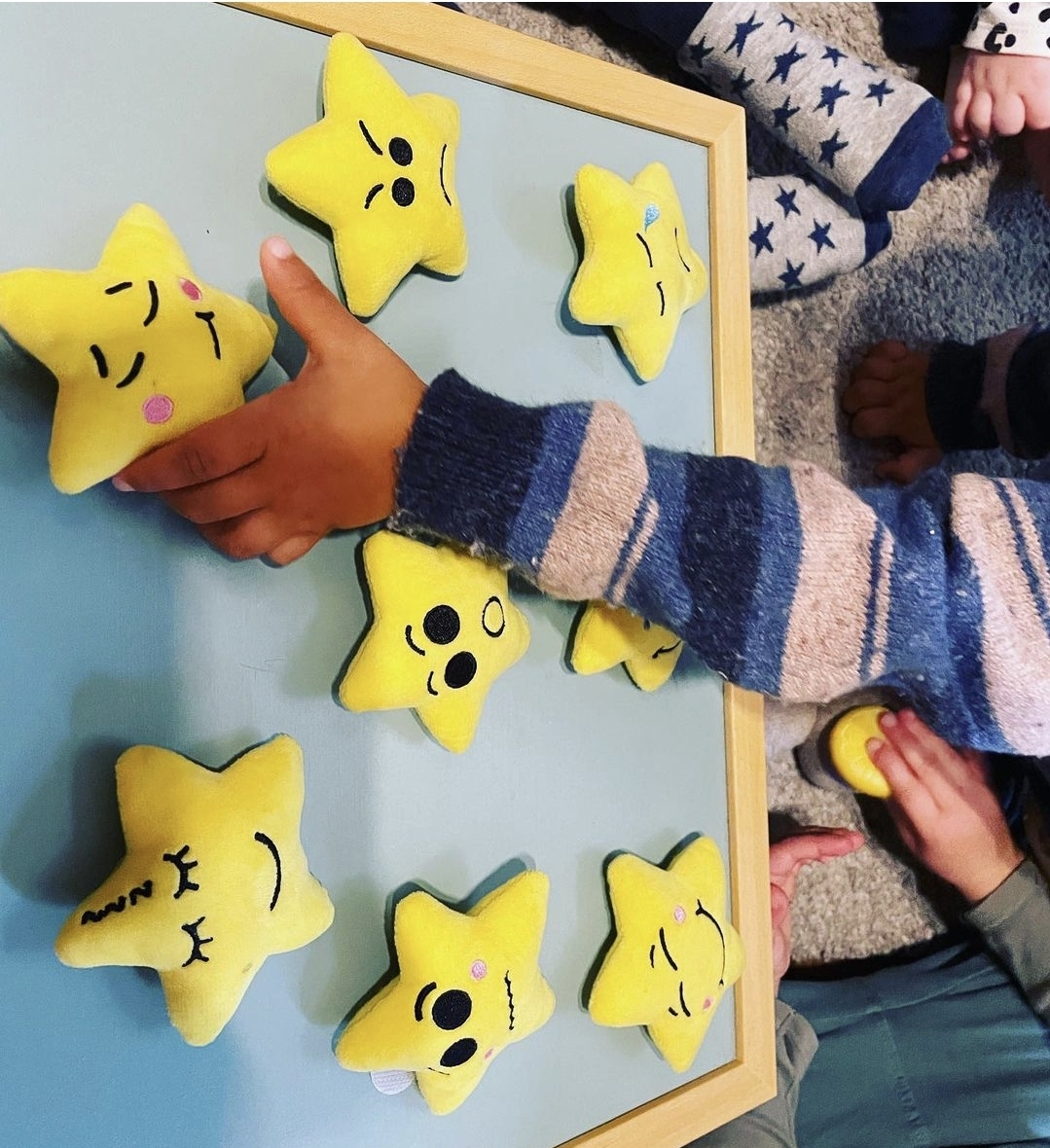
Because the stars are soft and hand-sized, pupils can fiddle with them, hold them close, or wear them as a badge to show how they feel – ideal for children who are non-verbal or reluctant to speak in front of others.
For pupils learning with EAL, emotions are often already fully formed – just not in English.
You can:
Then you can play those recordings when you introduce each emotion or representation – it’s powerful for pupils to hear their own language valued.
You’re not “forcing” English; you’re gently laying it alongside what they already know.
Think of emotional literacy for pupils learning with EAL and pupils who are non-verbal as a ladder:
Don’t rush the ladder. Some pupils will stay at the pointing/choosing stage for a long time – and that’s okay. They’re still communicating.
Once pupils start using stars or other visuals to share their feelings, we have to show it’s worth the effort.
For non-verbal pupils especially, your consistent responses teach them: “When I show this emotion, adults help me. I don’t have to explode to be noticed.”
Emotion work doesn’t have to be heavy. Build it into games:
Play lowers anxiety and lets pupils try on emotions at a safe distance.
For our pupils learning with EAL and pupils who are non verbal, emotions can feel like being stuck in a room with the lights off – they can sense everything, but can’t quite reach the switch.
Tools like My Mood Stars don’t magically fix everything, but they do give pupils something soft and safe to hold onto while they find their way to you.
Your job isn’t to force them to talk.
Your job is to keep offering simple, predictable ways to say: “This is me. This is how I feel. Please listen.”
And you’re already doing more of that than you think.





Are you looking for solutions? Let us help fund them! Nexus Education is a community of over 11,000 schools that come together to share best pract... View More
Established in 2011, One Education is a company at the heart of the education world, supporting over 600 schools and academies. Our unique appeal a... View More
School Space is a social enterprise that has empowered schools for over 14 years through their profitable and hassle-free lettings services. So far... View More
Unify is an online sales and marketing tool that allows users to create tailored personalised documents in moments. View More
There’s nothing special about the energy we sell. In fact, it’s exactly the same energy as all our competitors provide. But there is something spec... View More
Securus provide market-leading monitoring solutions to safeguard students on ALL devices both online and offline. We also offer a full monitoring s... View More
Robotical makes Marty the Robot - a walking, dancing coding robot that makes programming fun and engaging for learners as young as 5. Our robots co... View More