22-01-2021
11:30
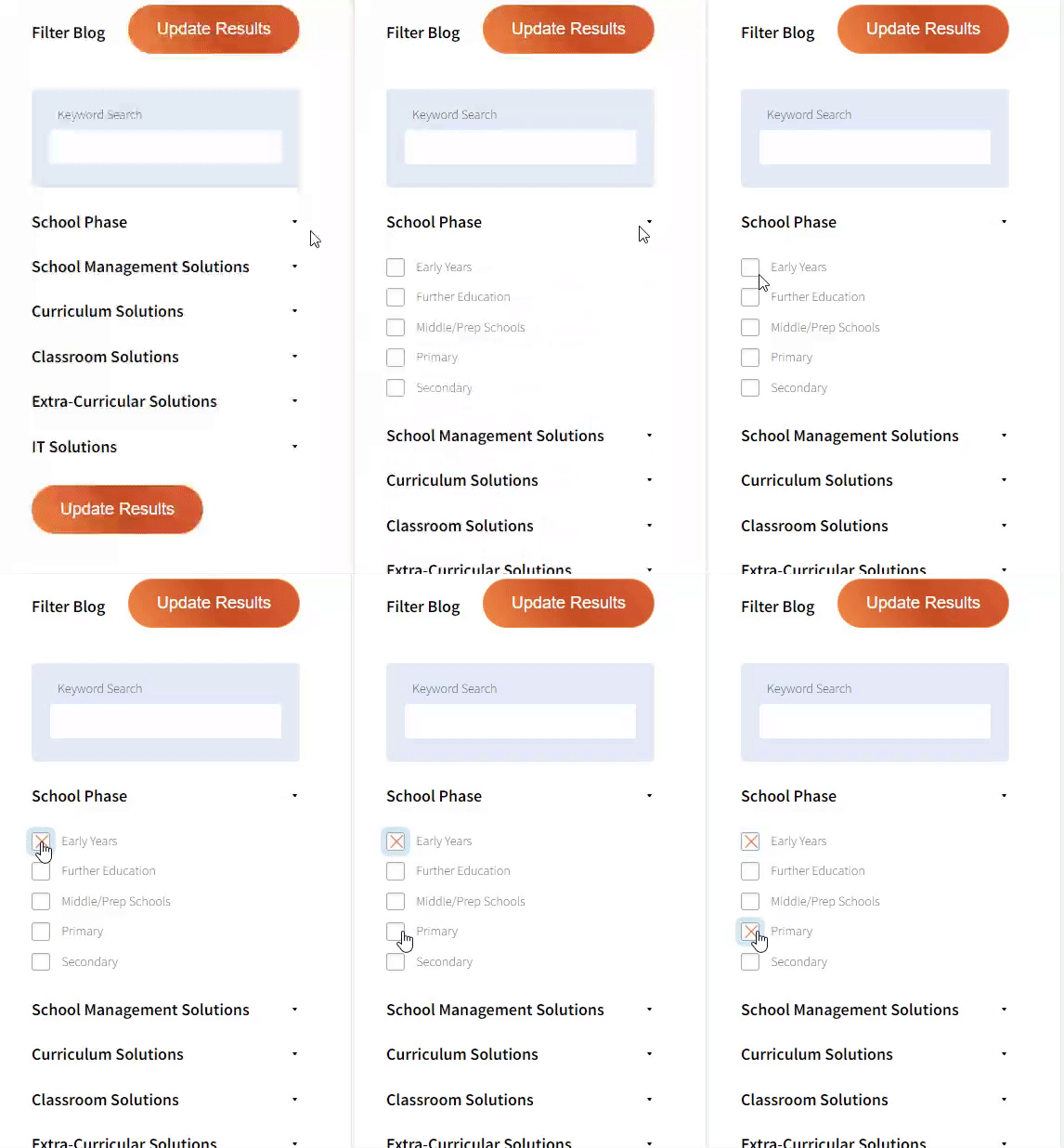
Our team sorts through all blog submissions to place them in the categories they fit the most - meaning it's never been simpler to gain advice and new knowledge for topics most important for you. This is why we have created this straight-forward guide to help you navigate our system.
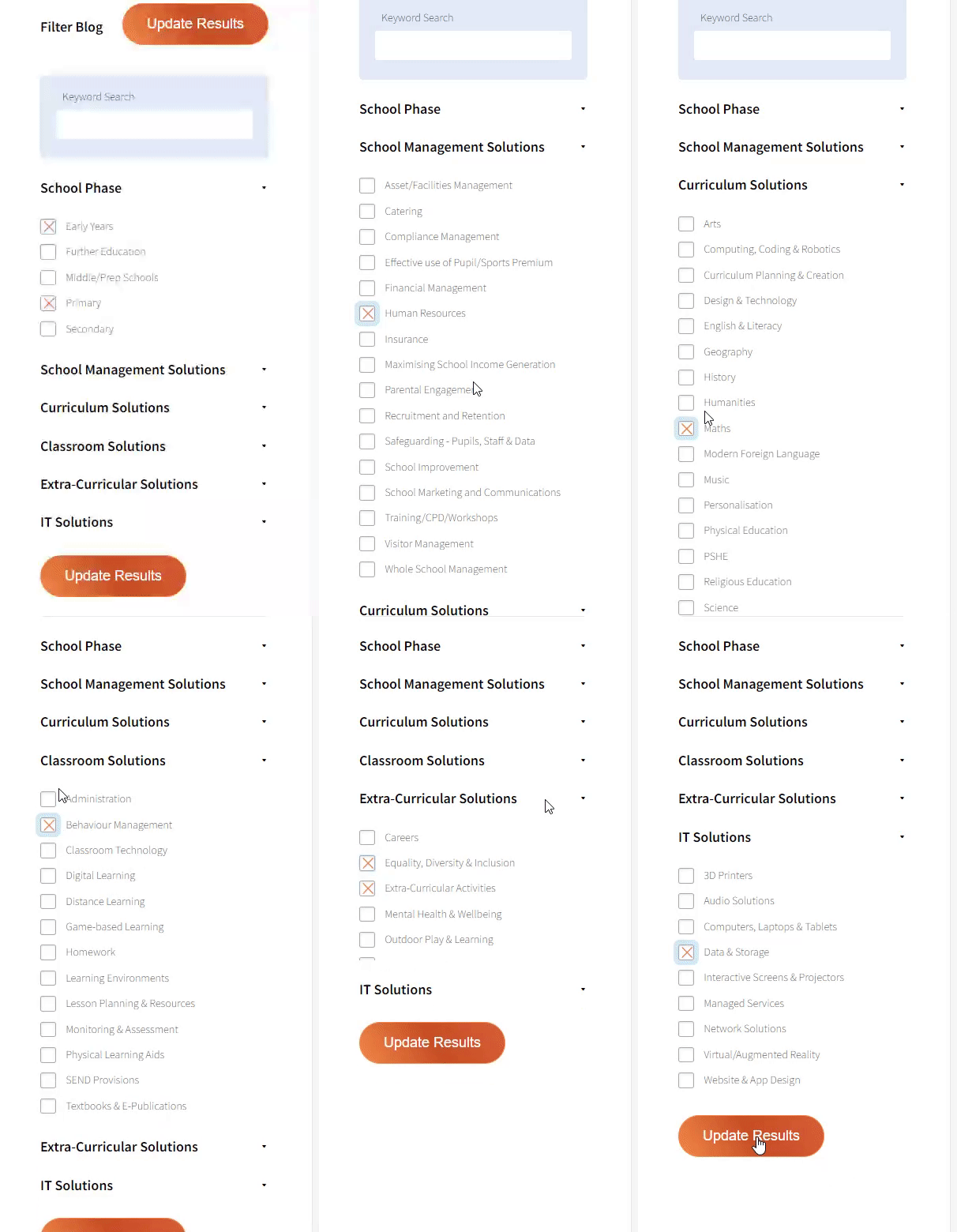
And there you have it! Now your collection of blogs are catered to your chosen topics and are ready for you to explore. Plus, if you frequently return to the same categories you can bookmark your current URL and we will save your choices on return. Happy Reading!
Poppy Gibson, Amber Browne and Joe Rose
When thinking about wellbeing in education, we often focus on being ‘mindful’ and staying present one day at a time; but what if we took a moment to imagine how our lives and careers in education may pan out? This article shares the overview of a small-scale research project on ‘Imagined Futures’, conducted by three researchers which invited educators to imagine their futures, in the hope that other teachers and settings may consider this as a wellbeing exercise.

About the Imagined Futures research project
This project was inspired by the essays written by an original study conducted by Pahl with school leavers living on the Isle of Sheppey, Kent in 1978. 141 original essays were collected as part of a broader ethnographic study of life on the island, which cumulatively built a complex picture of island life at the time. In terms of methodology, Pahl (1978) asked teachers at a comprehensive school on the Isle of Sheppey to set an essay for those students taking English lessons just before they left school. The young people, aged fifteen and sixteen, were asked to imagine they were close to the end of their life, and to think back to the time when they left school, then write an essay describing their life over the next 30-40 years.
After ethical approval, fifteen educators opted in to take part to share their own ‘imagined futures’ considering the possible future pathways developing, and the value of their role as an educator in that journey. Participants had the opportunity to write a creative essay ideally between 500-2000 words in length projecting their own future, written as if they were in old age looking back at their life.
In addition, they were invited to submit a visual image to accompany their essay; this was optional.
Participants were invited to think about the following broad topics:
How do you imagine your career developed?
What role does education play in your lifetime?
How does your role of lecturer feature in your lifelong journey?
What role do friends and family play?
Where do you live or travel?
How do you care for your wellbeing as you age?
Findings and considerations in education
After gathering fifteen stories and two images, the researchers used Thematic Analysis to draw out the main themes. And what did they find? Working in education wasn’t just a job for these participants; education was a space where they had been challenged, marginalised, and unsupported, yet through their roles as teachers, they had looked to make a difference for others. Driven by purpose, working with resilience, and finding strength through family, friends and colleagues, these participants imaged their futures mostly in a positive way. Nature was also a central theme; several of the participants imagined that they were aged 90, either sitting in their garden or with their toes in the sand on a beach.
Working in education was about pride in self-development, finding alignment with personal values in professional settings, and about remembering what it is to be human when sometimes the curriculum and assessments can seem to take focus. The takeaway from this study is to keep hold of our ‘why’ in education; why did we get into this profession in the first place and how is it serving us? Because the fifteen stories in this project showed that education can truly be transformative for our wellbeing and longevity if we only take a moment to stop and reflect.
Reference
Pahl, R.E. (1978) ‘Living without a job: how school leavers see the future’ New Society 2 November 1978: 259-62







Are you looking for solutions? Let us help fund them! Nexus Education is a community of over 11,000 schools that come together to share best pract... View More
Established in 2011, One Education is a company at the heart of the education world, supporting over 600 schools and academies. Our unique appeal a... View More
School Space is a social enterprise that has empowered schools for over 14 years through their profitable and hassle-free lettings services. So far... View More
Unify is an online sales and marketing tool that allows users to create tailored personalised documents in moments. View More
There’s nothing special about the energy we sell. In fact, it’s exactly the same energy as all our competitors provide. But there is something spec... View More
Securus provide market-leading monitoring solutions to safeguard students on ALL devices both online and offline. We also offer a full monitoring s... View More
Robotical makes Marty the Robot - a walking, dancing coding robot that makes programming fun and engaging for learners as young as 5. Our robots co... View More