09-05-2025
10:11
Our team sorts through all blog submissions to place them in the categories they fit the most - meaning it's never been simpler to gain advice and new knowledge for topics most important for you. This is why we have created this straight-forward guide to help you navigate our system.
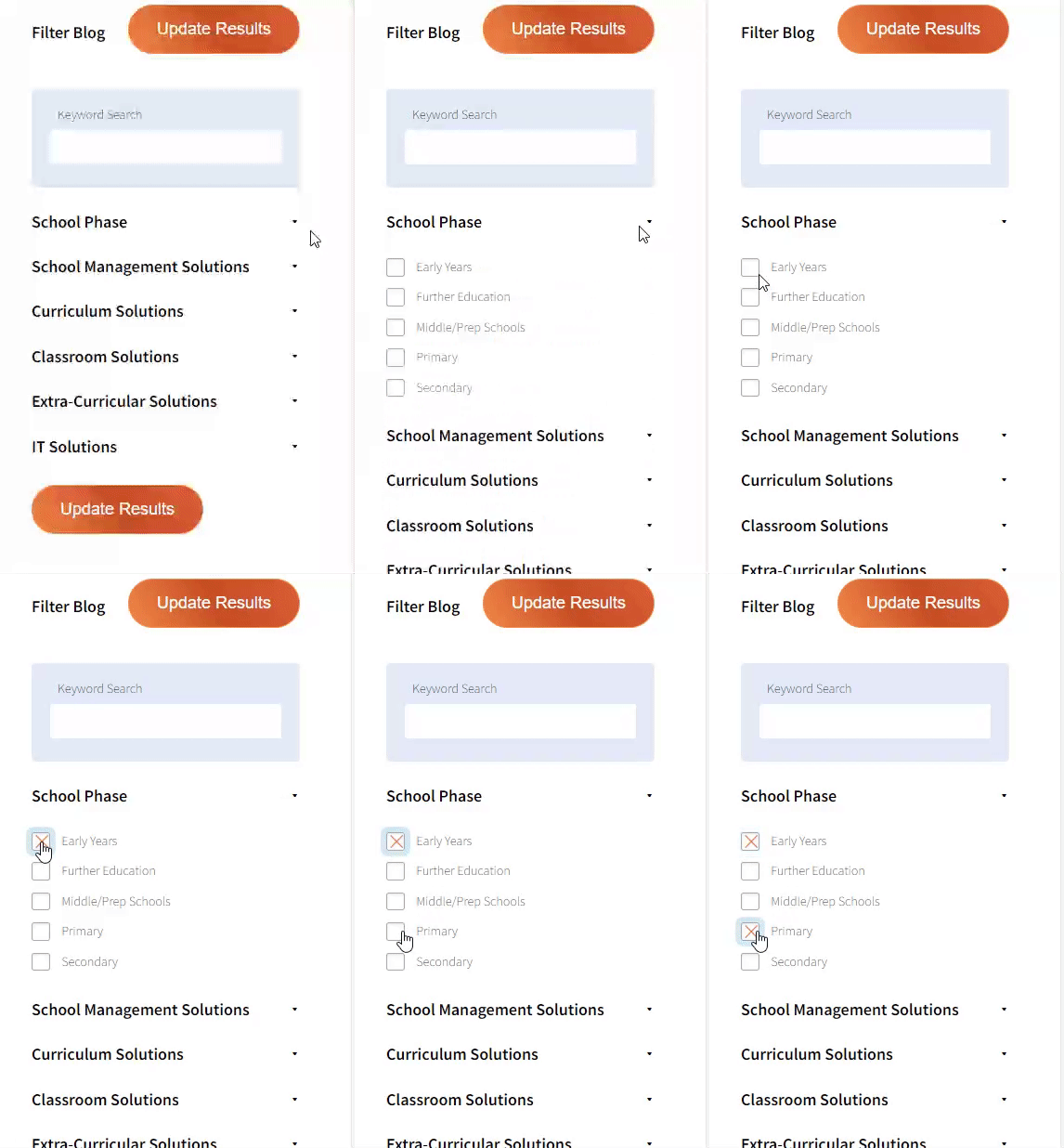
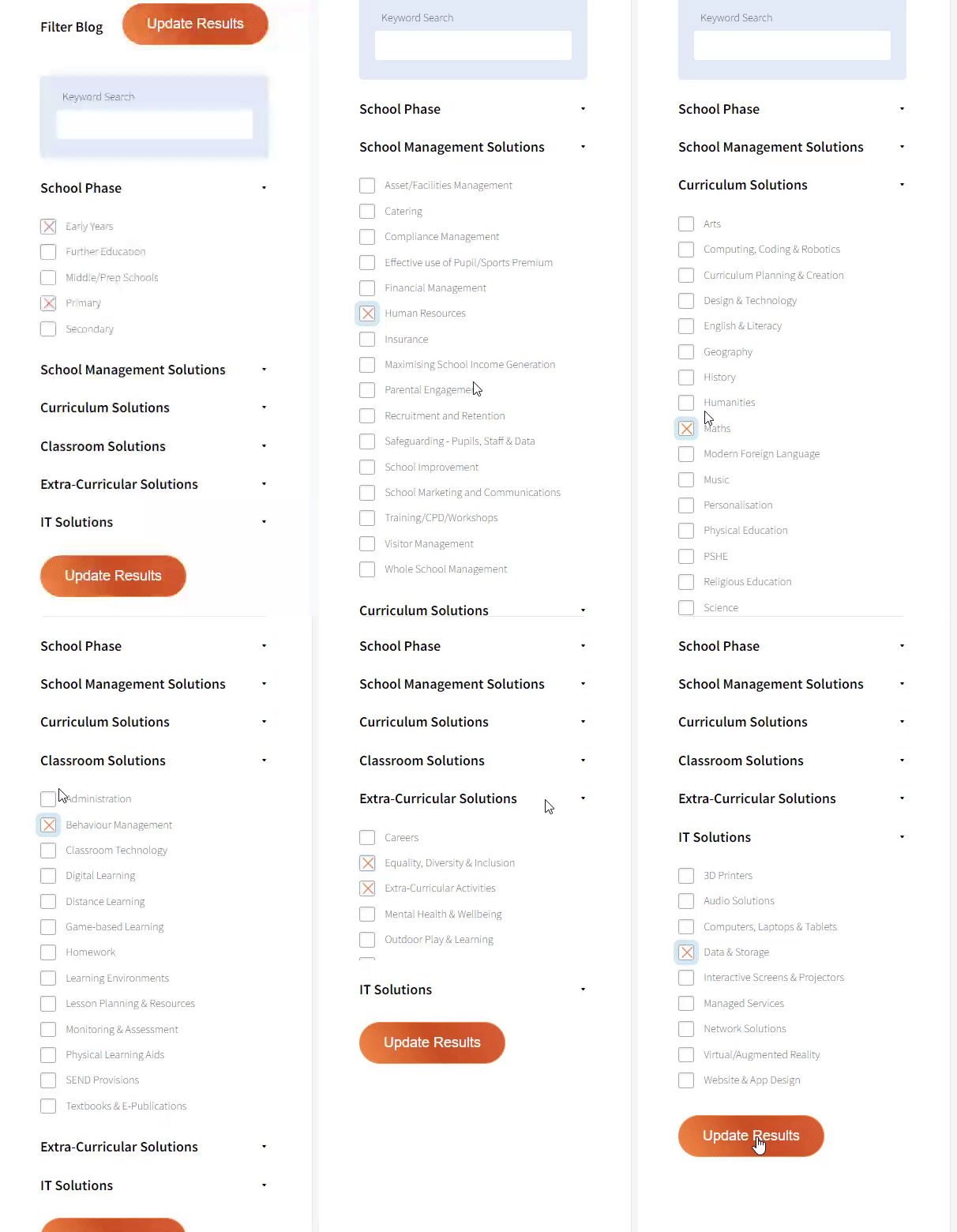
And there you have it! Now your collection of blogs are catered to your chosen topics and are ready for you to explore. Plus, if you frequently return to the same categories you can bookmark your current URL and we will save your choices on return. Happy Reading!
Most schools will have embraced some element of student voice, perhaps a suggestion box, student council or surveys. But what do students really think about pupil voice?
In my study comparing secondary school students and teaching staffs’ experiences of inclusion, the topic of voice came up time and time again (Collett, 2024). In fact, it helped contribute to the findings labelling agency as one of the core elements of inclusive education.
Most of the students participating in my study, explained how important it was for their teachers to listen to their ideas, needs and experiences. They wanted to be heard and for their teachers to act on it. However, none of them truly believed that their views were listened to unless they fitted into what the school was already planning on doing. Some students explained how they had given up trying to have their voices heard; it was pointless.

The participants suggested that student voice should be replaced with student choice. Teachers and students should be making joint decisions. That way the students could have real input into how the school ran and have influence over their learning.
The teachers taking part in my study, reflected on student voice and wanted to do more with what students told them. But they felt constrained. If the shift to student choice took place, then how would that work in terms of classroom management, when would they find the time to sit down and make joint decisions, how would they manage conflicting viewpoints?
Seating plans for example, were decided by the teachers carefully to ensure that everyone could learn and to minimise potential classroom behaviour issues. Allowing students to chose where to sit could undermine all of that. In fact, the NASWUT (2024), explain how student voice shouldn’t challenge teacher authority, add to workload or impact behaviour.
Well Cook-Sather (2020) argues that despite the challenges, choice is important as this agency will improve learning and teaching. If students are involved in decision making, then they will feel valued and it will contribute to that all important mutual respect between teachers and pupils. It will also allow teachers and schools to gain a much better understanding of what students need.
Sam and Max, two of the students who took part in my study, suggested that they don’t want to make all the decisions. They categorically stated that teachers often know best, after all they have had years of training and experience. They just wanted to be involved where they could, even if it was just the small stuff. And they said they would be happy if their suggestions weren’t actioned as long as there was a discussion as to why; if there was a good reason why it couldn’t be the way they wanted that was fine.
Joint decision making is not always going to be easy. There will be constraints like time, and other aspects of the classroom to consider like behaviour management. However, the reward of focusing more on choice, is strengthened student-teacher relationships and more insight into what works best for the students.
And that might just help get more student buy-in. If they feel listened to, their agency valued and ownership over what is happening, they may well be more motivation to participate and abide by the decisions made.
References
Collett, K. (2024). Comparing young people with and without SEND and teaching staff’s experiences of ‘inclusions’ in English secondary school classrooms. [PhD Education]. University of Exeter. Item – Comparing young people with and without SEND and teaching staff’s experiences of ‘inclusions’ in English secondary school classrooms. – University of Exeter – Figshare
Cook-Sather, A. (2020). Student voice across contexts: Fostering student agency in today’s schools. Theory Into Practice, 59(2), 182-191. doi: 10.1080/00405841.2019.1705091
NASUWT. (2024). Student voice (England, Northern Ireland and Wales). NASUWT The teachers’ union. NASUWT | Student Voice (England, Northern Ireland and Wales)








Are you looking for solutions? Let us help fund them! Nexus Education is a community of over 11,000 schools that come together to share best pract... View More
Established in 2011, One Education is a company at the heart of the education world, supporting over 600 schools and academies. Our unique appeal a... View More
School Space is a social enterprise that has empowered schools for over 14 years through their profitable and hassle-free lettings services. So far... View More
Unify is an online sales and marketing tool that allows users to create tailored personalised documents in moments. View More
There’s nothing special about the energy we sell. In fact, it’s exactly the same energy as all our competitors provide. But there is something spec... View More
Securus provide market-leading monitoring solutions to safeguard students on ALL devices both online and offline. We also offer a full monitoring s... View More
Robotical makes Marty the Robot - a walking, dancing coding robot that makes programming fun and engaging for learners as young as 5. Our robots co... View More