22-03-2022
12:56
Our team sorts through all blog submissions to place them in the categories they fit the most - meaning it's never been simpler to gain advice and new knowledge for topics most important for you. This is why we have created this straight-forward guide to help you navigate our system.
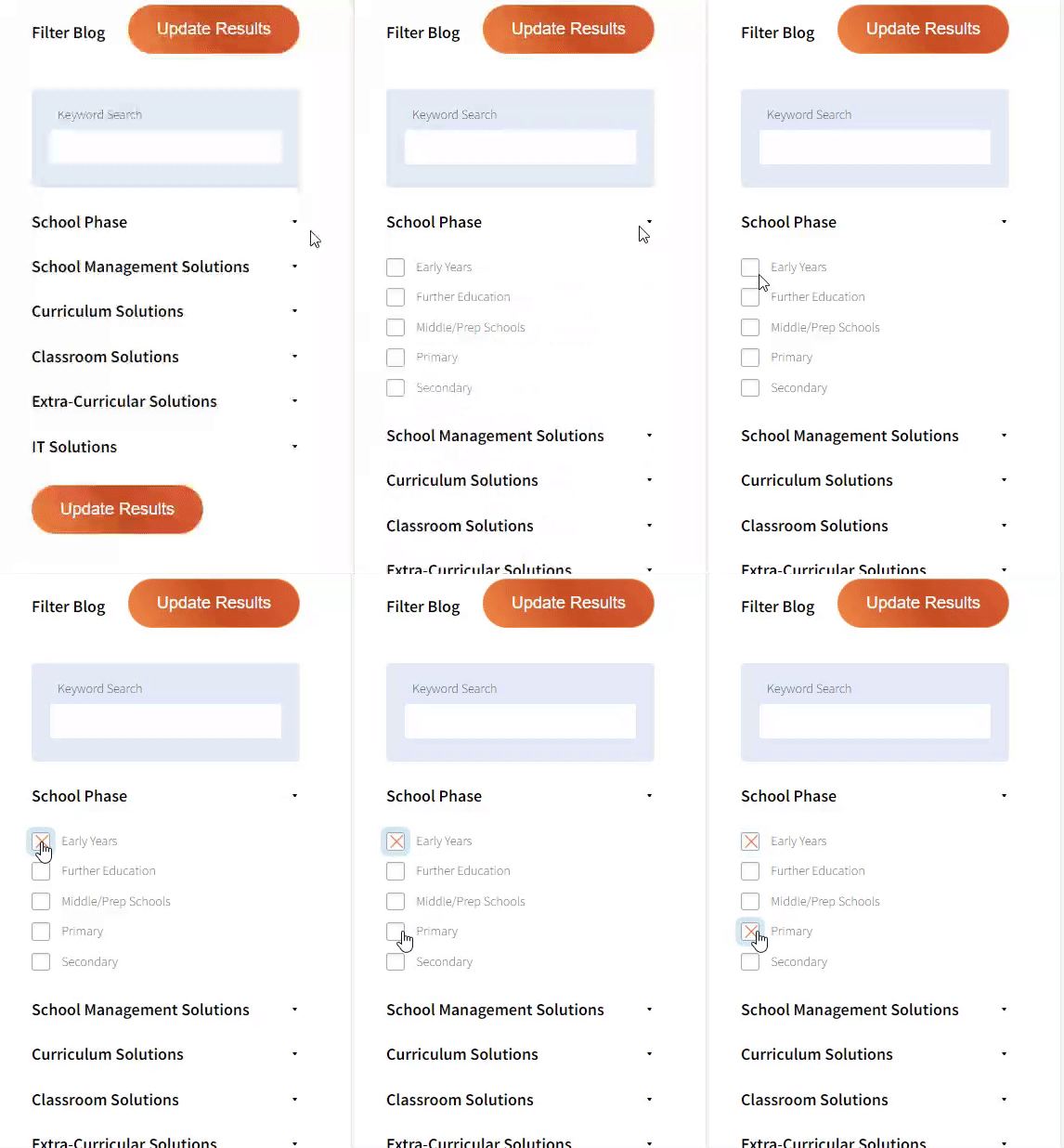
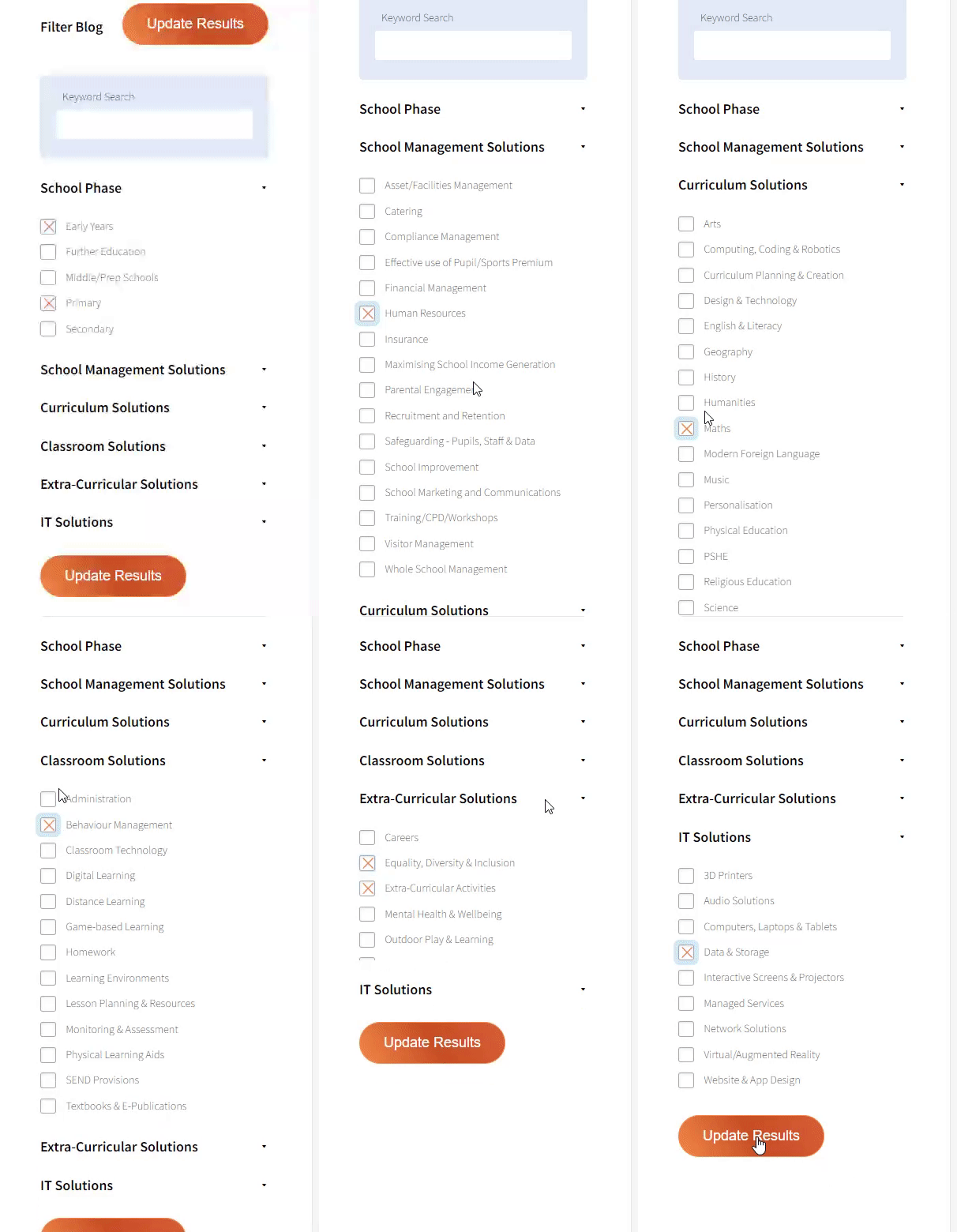
And there you have it! Now your collection of blogs are catered to your chosen topics and are ready for you to explore. Plus, if you frequently return to the same categories you can bookmark your current URL and we will save your choices on return. Happy Reading!
Picture a classroom where every child is reading a story about something they actually care about, at exactly the right level for them, generated in seconds. A reluctant reader absorbed in a book about Pokemon. A struggling reader finally finding their pace. A curious reader diving deeper into whatever obsession they’ve brought through the door that morning. All at once, all in the same classroom.
That’s what Everybody Reads does. And thanks to a new independent study from the University of Strathclyde, we now have compelling evidence of its impact.
So what is Everybody Reads?
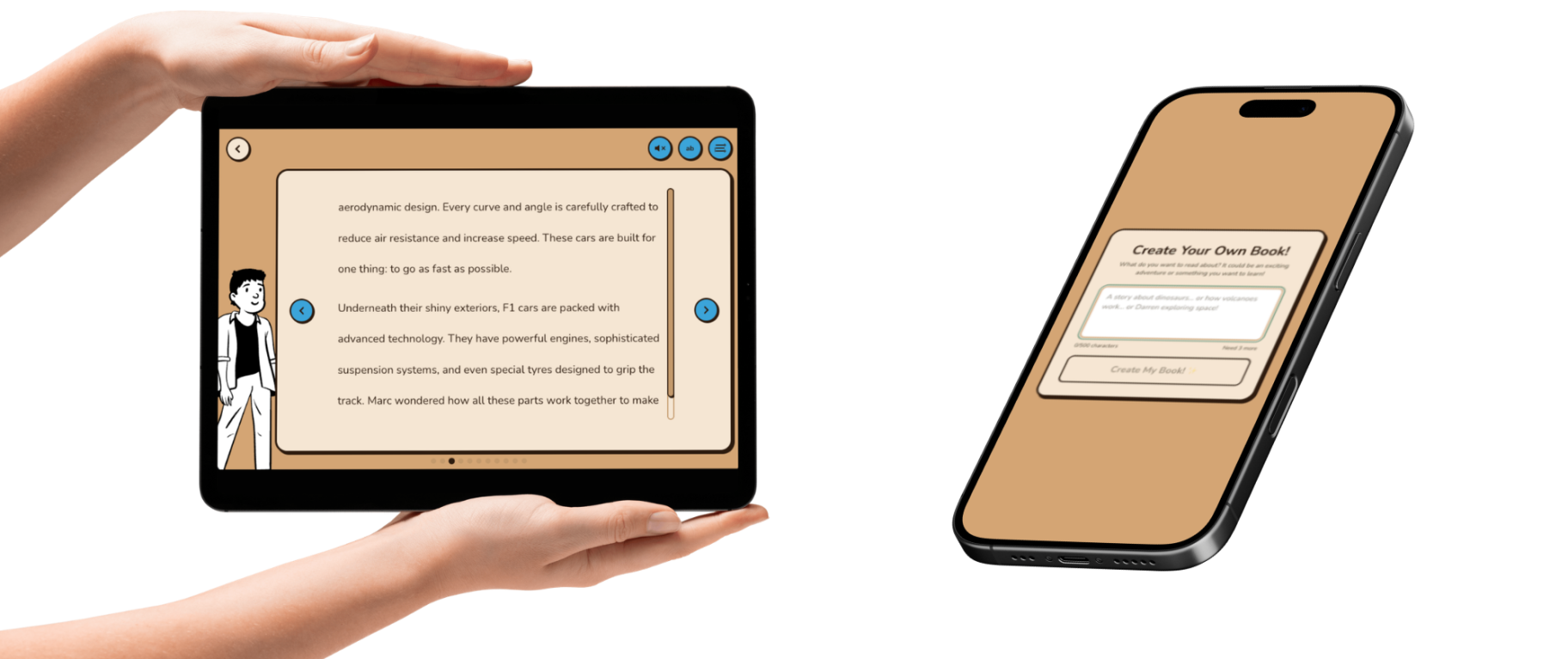
I’m Marc Graham. Before I built Everybody Reads, I spent over 15 years as a primary school teacher and in senior leadership positions across Scotland and internationally. That time in the classroom convinced me that the biggest barrier to reading isn’t ability. It’s finding a book that feels like it was made for you.
Jonathan Douglas, Chief Executive of the National Literacy Trust, puts it plainly: “Young people are still motivated to read when it connects to their interests, when they have choice, and when it feels relevant to their lives.” Everybody Reads is built around exactly that idea.
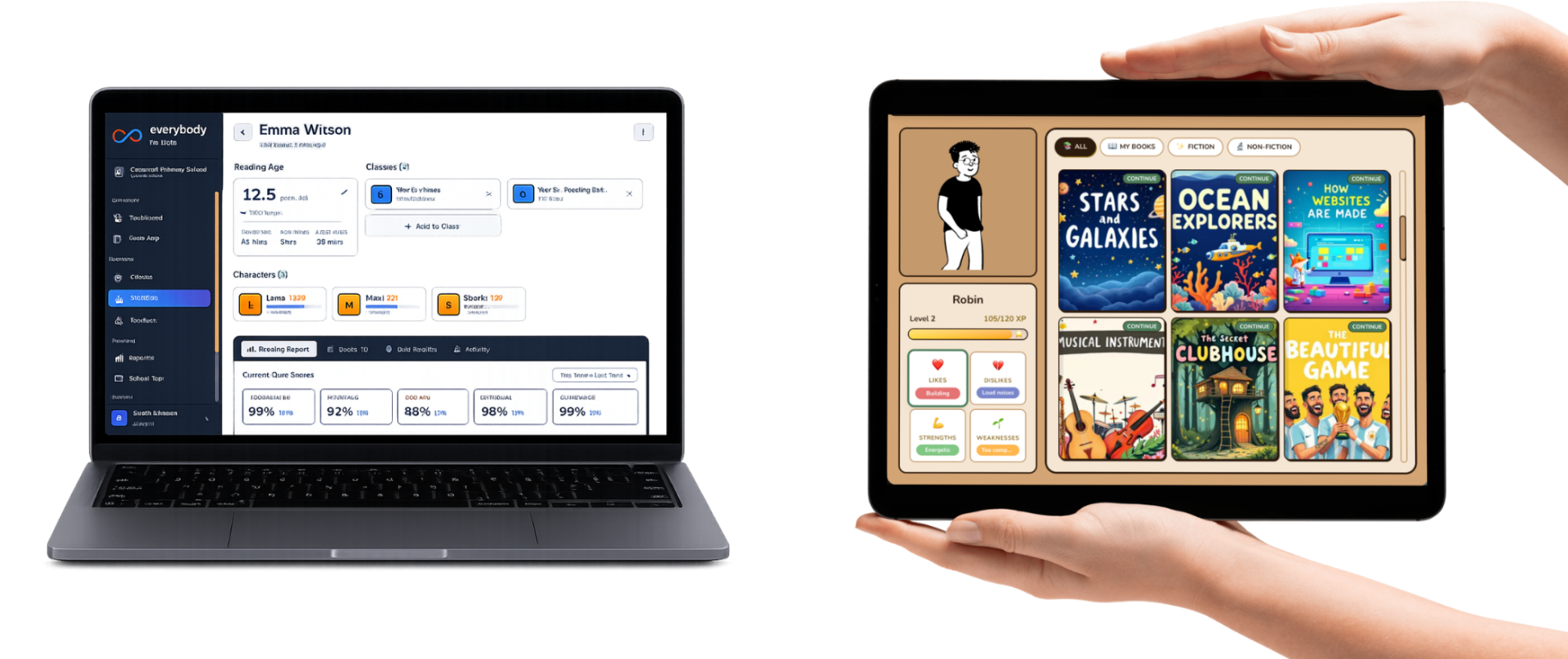
The platform generates personalised fiction and non-fiction texts calibrated to a child’s individual reading age, covering the full range from 5.0 to 12.0 in half-year increments. Texts come from three sources: our Everybody Reads library, books created by teachers around any concept they’re teaching, and best of all, books created by the students themselves around their own interests. So whether it’s a busy teacher who wants fully personalised and levelled texts on photosynthesis for every student in their class, or a disengaged 12-year-old who finally gets to create and read their own book about Minecraft at their 7-year-old vocabulary level, Everybody Reads literally has a book for every occasion.
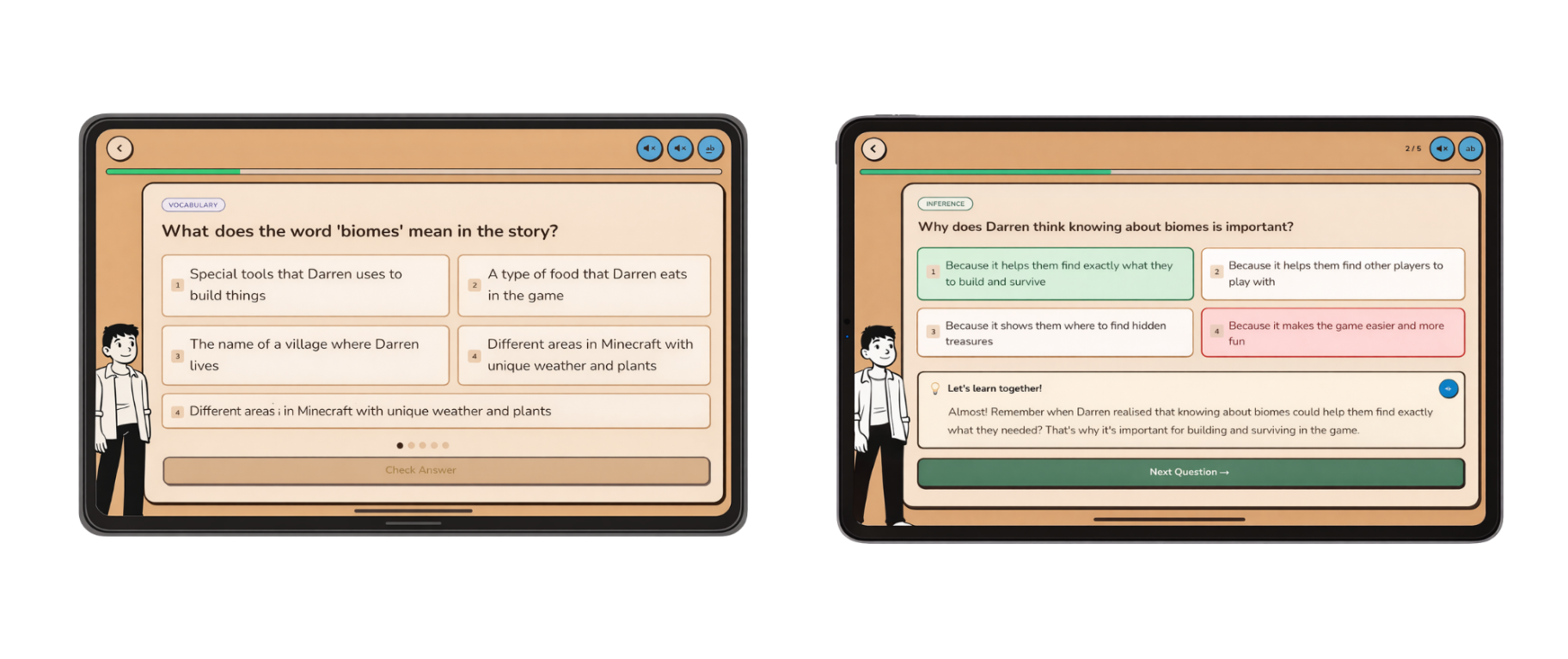
Stories are built around the VIPERS similar comprehension framework, meaning children aren’t just reading, they’re actively developing the full range of comprehension skills teachers care about.
Additionally, because the platform tracks every child’s reading age over time, Everybody Reads is adaptive by design. As a child’s reading develops, the texts they receive adjust accordingly, meaning the level is always right and the challenge is always appropriate. We’ve also mapped the entire dictionary to track vocabulary exposure at every age and stage of the reading journey, so students aren’t just becoming better readers, they’re building a richer, broader vocabulary in a way that’s measurable and evidenced. Teachers can see all of this at a glance through the Everybody Reads analytics dashboard, a clean, easy-to-use view of how every child in their class is progressing, what they’ve read, and where they need support next.
The Study
In early 2026, Dr Yingying Zhao and Dr Andrew Abel at the University of Strathclyde ran an independent data analysis on real platform usage across a 10-week period. 443 students were active for the study.
The researchers tracked reading behaviour, comprehension quiz performance, vocabulary development, and reading age progression over time.
Here’s what they found.
Reading ages actually go up
A paired t-test conducted on 251 students showed an average increase in reading age of 0.617 years, and this improvement was highly statistically significant (p < .001).
In plain terms: children using Everybody Reads made, on average, more than half a year of reading age progress in around ten weeks. That’s significant progress in a short time.
The more they use it, the more they gain
One of the clearest findings from the study is what researchers call a dose-response relationship. Reading age gain increases with the frequency of engagement, with total chapters read used as a proxy for how often students were actively using the platform.
This isn’t surprising, but it is reassuring. The platform isn’t producing a one-off novelty bump. Children who kept coming back kept improving.
The children who need it most benefit most
This is perhaps the most important finding, and the one that matters most from an equity perspective.
Students were grouped into three bands based on their starting reading level: low (below 6), medium (6-9), and high (above 9). Students in the low ability group showed a mean gain of 0.21 years with very low standard deviation, meaning weaker readers experienced stable and reliable improvement on the platform. Medium ability students, the largest group with 267 students, achieved the highest average growth at 0.45 years.
The children who often get left behind in whole-class reading tasks are the ones for whom personalisation matters most, and the data suggests they’re getting genuine benefit from it.
Teachers make a difference
The study also looked at whether teacher engagement with the platform affected outcomes at a class level. Using class-level activity as a proxy for teacher involvement, results showed a positive relationship between the average number of chapters read per student and average reading age gain at the class level, with a Spearman correlation coefficient of 0.551 (p = 0.0128).
In short, when teachers actively push students to use the platform, the results are stronger. The tool supports the teacher; it doesn’t replace them.
What this means for schools
Everybody Reads is already being used across three local authorities in Scotland, one Multi Academy Trust in England, as well as over 100 additional schools in the UK and internationally. Thousands of students across the UK and beyond have used the platform.
The University of Strathclyde study gives schools something they rarely get: independent, peer-reviewed evidence that a specific EdTech tool produces measurable outcomes.
I started my teaching career in some of the most deprived communities in the south of Glasgow, and those years working with children and families who had the least shaped how I think about everything we build at Everybody Reads. That’s why every student on Pupil Premium (or Pupil Equity Fund in Scotland) accesses the platform free of charge, with discounts matched directly to a school’s PP percentage up to 50%. The platform is inclusive by design, ensuring every child gets texts calibrated to their exact reading level, but it’s also equitable by commercial design, because a child’s socioeconomic circumstances should never be the thing that determines whether they have access to high quality reading materials. As both a teacher and a founder, that’s something I’m genuinely proud of.
If you’re curious about running a pilot or booking a professional development session, get in touch at www.everybodyreads.org.uk.




Are you looking for solutions? Let us help fund them! Nexus Education is a community of over 11,000 schools that come together to share best pract... View More
Established in 2011, One Education is a company at the heart of the education world, supporting over 600 schools and academies. Our unique appeal a... View More
School Space is a social enterprise that has empowered schools for over 14 years through their profitable and hassle-free lettings services. So far... View More
Unify is an online sales and marketing tool that allows users to create tailored personalised documents in moments. View More
There’s nothing special about the energy we sell. In fact, it’s exactly the same energy as all our competitors provide. But there is something spec... View More
Securus provide market-leading monitoring solutions to safeguard students on ALL devices both online and offline. We also offer a full monitoring s... View More
Robotical makes Marty the Robot - a walking, dancing coding robot that makes programming fun and engaging for learners as young as 5. Our robots co... View More